The Rotational Rebalancing
By Fauzia Timberlake,
personal coach for trading options
July 20, 2026
Market Roundup & The Week in Review
The capital markets experienced a highly calculated, mid-summer ending July 17th, 2026. Following several weeks of intense positioning across the artificial intelligence and advanced infrastructure sectors, institutional desks utilized the full five-day cycle to engage in broad portfolio rebalancing. The overriding narrative centered on structural asset allocation, with capital quietly rotating away from overextended high-beta technology entities and seeking refuge in defensive structures, traditional blue-chip value, and localized industrial networks.
A distinct "forced realism" began to permeate the trading floor as market participants carefully weighed corporate margin expansion against a backdrop of persistent macroeconomic friction. While early corporate earnings scorecards from money-center financial institutions provided a baseline validation of corporate health, forward-looking guidance remained highly sensitive to broader consumer spending trends and supply chain logistics. Investors deliberately looked past single-catalyst headlines, focusing instead on multi-layered themes including structural domestic manufacturing trends, shifts in credit yields, and capital expenditure durability.
Fixed-income markets remained orderly yet firm, acting as an underlying anchor for broader equity valuations. The 10-Year Treasury yield tracked within a steady range, reflecting a degree of market stabilization regarding the monetary policy trajectory for the final half of the year. This consolidation in credit markets provided the necessary atmospheric oxygen for select value equities to firm up, even as mega-cap growth took a secondary position to cyclical infrastructure layers.
Meanwhile, commodity and currency markets signaled a transition into a new phase of tactical equilibrium. Global energy footprints digested shifts in supply lines, effectively compressing the high-beta geopolitical risk premium that had influenced previous cycles, while precious metals maintained a tight technical range. For options strategists, this compression in raw index volatility presents a pristine environment, driving rich premium opportunities across specific underlyings while baseline equity metrics establish fresh technical baselines ahead of the core earnings wave consolidation during the trading week.
Strategy Corner
Based on this week's market movements, here are some trading ideas and option strategies for the readers' consideration. The positions can be scaled bigger (or smaller) to suit individual account size.
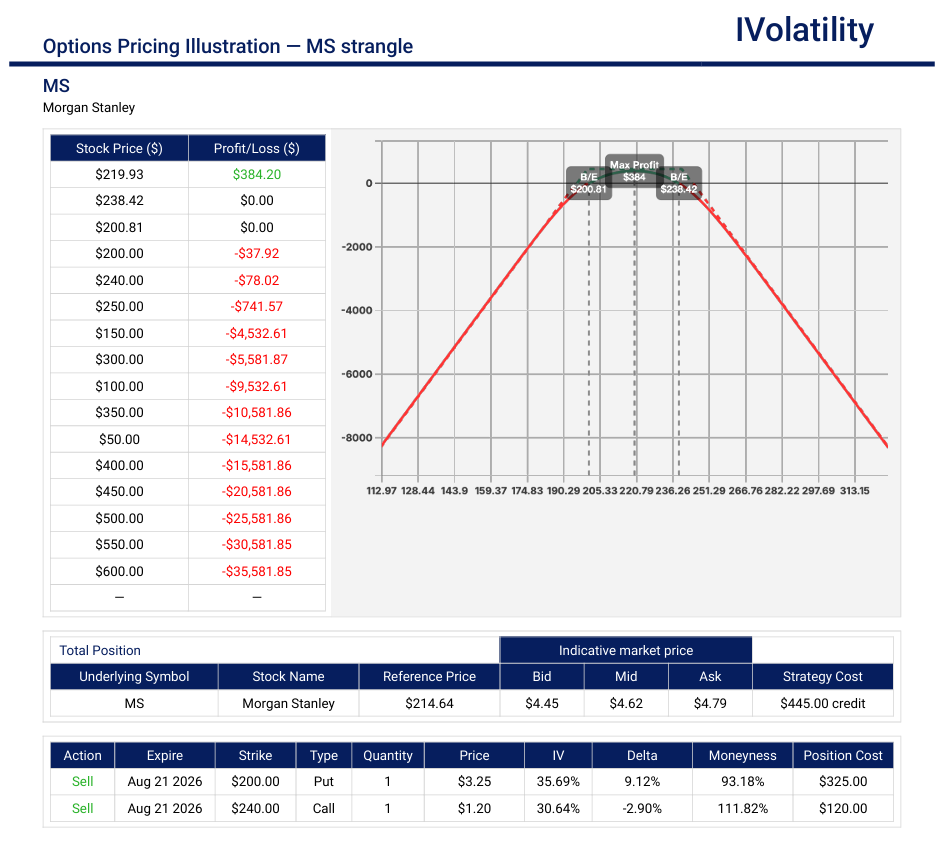
MS (closed at 215.47 on Friday, July 10th)
The expectation that the FOMC will maintain a steady-to-easing interest rate environment favors firms with diversified revenue streams. By leaning bullish, we are betting that the firm's Q2 earnings momentum will continue to carry the stock upward as institutional investors rebalance into financial services.
Outlook: neutral, leaning bullish
Strategy: short strangle
In the August monthly expiration, sell the 200put / 240call
Premium collected about $450/contract
Probability of profit is around 60%
NFLX (closed at 68.86 on Friday, July 10th)
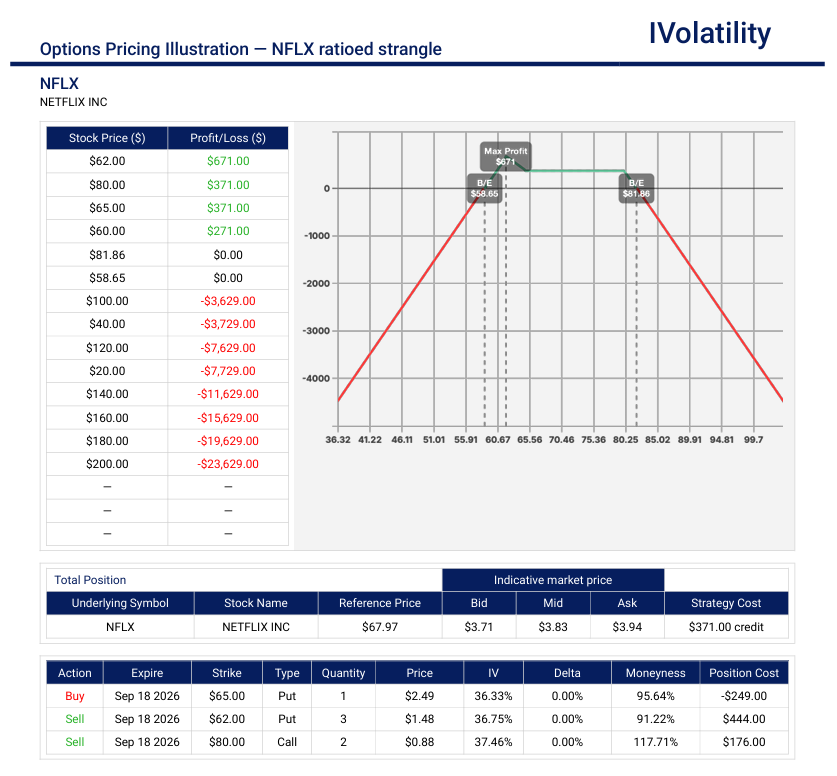
Netflix shares experienced a sharp retracement following their recent earnings report, driven primarily by market anxiety regarding the pace of subscriber growth in international markets. The market's "sell-the-news" reaction often creates a classic overreaction, ignoring that the long-term engagement metrics remain superior to competitors. If a trader would like to get bullish at this level, a ratioed strangle could be opened.
Outlook: leaning bullish, but some more downside could be absorbed and potentially profitable
Strategy: ratioed strangle
In the September monthly expiration, sell TWO of the 62put / 80call strangles and spend some of the credit to buy the 65/62 long put spread.
Premium collected about $400/contract. Note that if NFLX expires between 62 and 65, an additional profit can be realized with a max value of $300 at the sweet spot of 62.
Probability of profit is around 80%
Breakevens around 60 and 84
Movement of the Major Market Indices:
This week marked a notable "momentum meltdown" that dominated market sentiment. While the broad indices faced selling pressure as investors rotated away from crowded AI and semiconductor trades, internal breadth remained resilient, with defensive and cyclical value sectors providing a floor for the market. Geopolitical tensions in the Middle East—specifically surrounding the Strait of Hormuz—rekindled inflation concerns and spurred a flight to energy, while fixed income markets gained as investors processed cooling domestic inflation data.
| INDEX | UP | DOWN |
| SPY | -1.19% | |
| QQQ | -2.98% | |
| IWM | -0.41% | |
| DIA | -1.16% | |
| GLD | -2.17% | |
| BTC/USD | 0.12% | |
| 10-year yield | -1.09% | |
| Crude Oil | 10.71% | |
| VIX | 14.77% |
Movement of the Major Market Sectors:
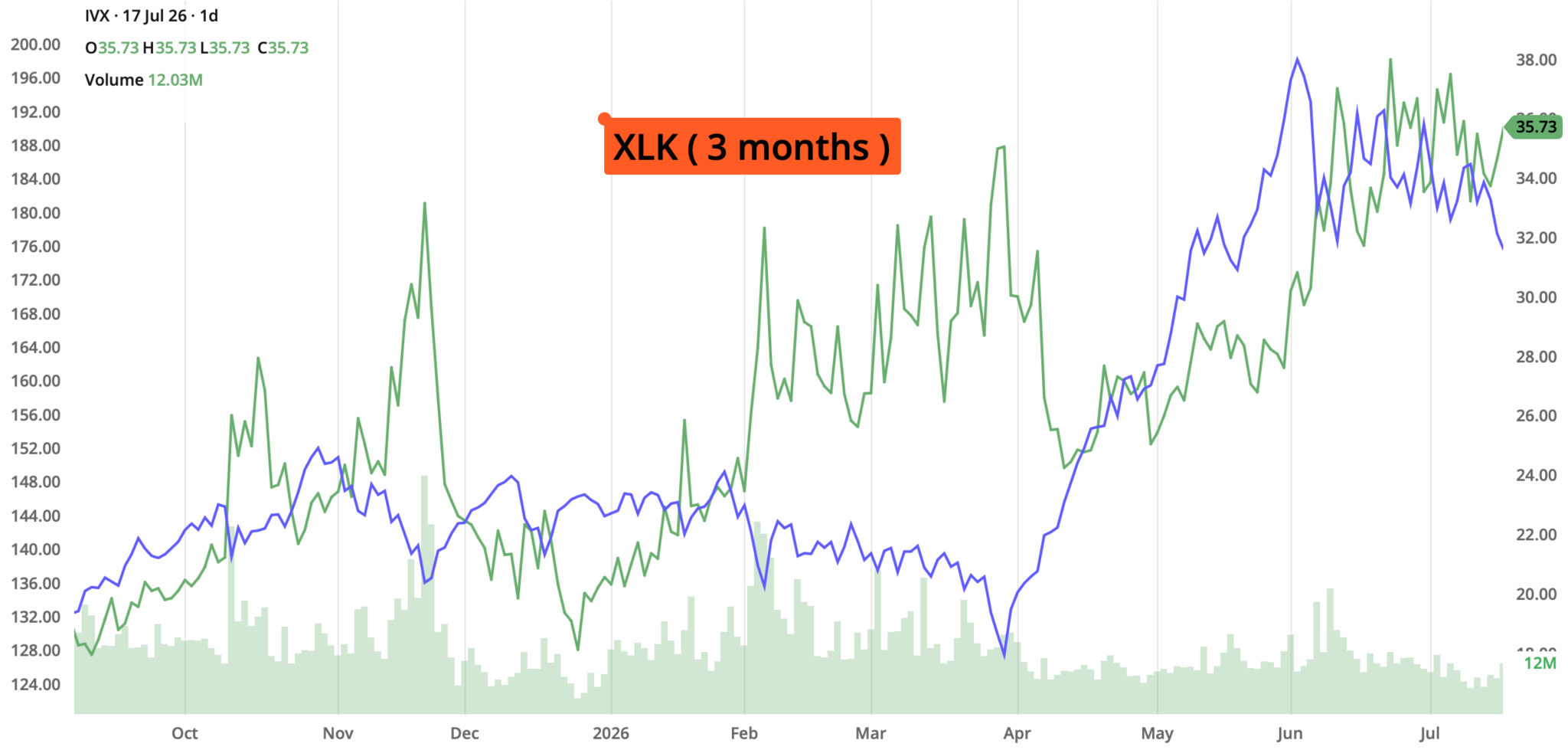
This week’s sector performance highlights a clear rotation as investors recalibrated their exposure amid a "momentum meltdown." Growth-oriented sectors, particularly Technology (XLK), faced significant selling pressure as valuation concerns and hyperscaler spending fatigue took center stage. In contrast, the market found relative stability through defensive and value-oriented rotation, as capital sought shelter from geopolitical volatility and lingering inflation anxieties.
| SECTOR | UP | DOWN |
| TECH (XLK) | -7.51% | |
| FINANCIALS (XL) | 0.50% | |
| INDUSTRIALS (XLI) | -1.16% | |
| ENERGY XLE | 3.26% | |
| HEALTHCARE (XLV) | 0.07% | |
| UTILITIES (XLU) | -0.62% | |
| MATERIALS (XLB) | -0.86% | |
| REAL ESTATE (XLRE) | 1.82% | |
| CONSUMER STAPLES (XLP) | 0.76% | |
| CONSUMER DISCRETIONARY (XLY) | -1.50% |
Notable Gainers Week of July 13th – July 17th
The week was characterized by a distinct rotation into defensive sectors and specific value plays as the broader market contended with a semiconductor-led pullback and geopolitical uncertainty. Despite the general cooling in growth stocks, select companies managed impressive rallies driven by favorable earnings reports and idiosyncratic strength.
- PayPal Holdings (PYPL, +22.13%): Topped the list this week, showing resilience as the company continues to trade at a significant discount to its fair value. The strong weekly performance appears to be a recalibration by investors who are beginning to recognize the stock's value proposition after a year of consolidation.
- Dentsply Sirona (XRAY, +14.72%): Secured the second spot, benefiting from renewed momentum that has pushed shares toward their fair value estimate. The move highlights a broader trend of capital shifting toward steady-state healthcare and equipment providers amid tech-sector volatility.
- Cintas Corporation (CTAS, +13.81%): Continued its strong performance trajectory, ranking third for the week. The stock's ability to trade near fair value while maintaining wide-moat status has made it a preferred holding for investors seeking stability during the mid-July market turbulence.
Notable Losers Week of July 13th – July 17th
The market's enthusiasm for the AI trade faced a rigorous stress test this week. As semiconductor valuations came under pressure—exacerbated by both geopolitical headlines and concerns over future AI monetization—several high-flying tech names saw significant retracements from their recent highs.
- Advanced Micro Devices (AMD, -8.12%): Led the downside as semiconductor stocks faced a broad rout. Investors grew skittish following reports of intensified competition in the AI hardware space, causing this high-beta name to lead the sector's decline.
- NVIDIA Corporation (NVDA, -7.50%): Experienced a notable pullback as valuation concerns returned to the forefront of the AI narrative. The heavy selling pressure observed late in the week reflects a "risk-off" sentiment regarding hyper-growth tech stocks.
- Micron Technology (MU, -6.95%): Suffered alongside its semiconductor peers as the sector fell victim to broader valuation corrections and intensified geopolitical tensions, which weighed heavily on firms with complex, global supply chains.
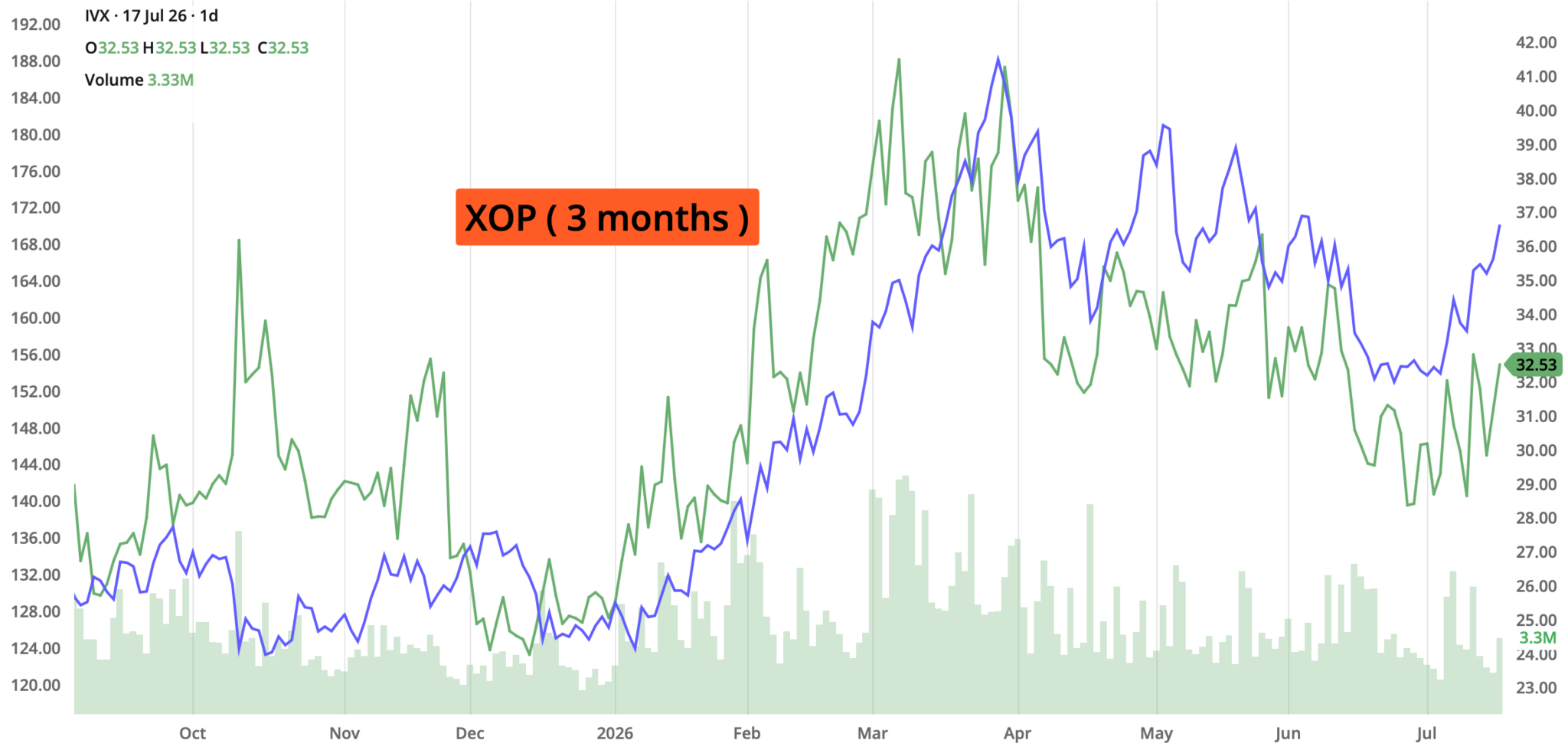
Review selected market indices below:
Daily Notable Market Action
Market Summary for Monday, July 13th
Equity markets struggled to find footing as the week opened, with investors grappling with a renewed spike in crude oil prices following news that the U.S. was restarting a blockade in the Strait of Hormuz. The geopolitical uncertainty fueled inflationary fears, overshadowing the early optimism surrounding the start of the Q2 earnings season. While the financial sector prepared for a heavy slate of reports, the broader market faced a "risk-off" tone, leading to broad-based selling across the tech-heavy Nasdaq.
Fixed-income markets saw yields tick higher as traders adjusted to the heightened geopolitical risk premium.
- S&P 500: 7,515.34 (-0.79%)
- Nasdaq Composite: 25,873.18 (-1.58%)
Market Summary for Tuesday, July 14th
Markets staged a modest recovery as financial services giants kicked off the earnings season with strong results, providing a much-needed confidence boost to the banking sector. Major firms like JPMorgan Chase and Bank of America reported robust figures, which helped offset lingering anxiety from the previous day's energy spikes. The Dow hit a fresh intraday high as capital rotated into value-oriented financial names, though the tech sector remained guarded as investors awaited further clarity on AI-related capital expenditures.
- S&P 500: 7,543.59 (+0.38%)
- Nasdaq Composite: 26,107.01 (+0.90%)
Market Summary for Wednesday, July 15th
Trading remained range-bound as the market digested the initial wave of earnings. While financial stocks continued to show relative strength, technology shares faced choppy action; the Nasdaq managed to eke out a gain after a midday recovery in semiconductor stocks, which had been under significant pressure. Investors kept a close eye on the broader macro landscape, looking for signs that the recent dip in inflation data might provide the Fed with more flexibility, even as the "AI trade" continued to face intense scrutiny from market participants.
- S&P 500: 7,572.40 (+0.38%)
- Nasdaq Composite: 26,269.23 (+0.62%)
Market Summary for Thursday, July 16th
The optimism from the banking reports hit a wall as high-profile technology releases failed to soothe investor nerves. Concerns over the massive capital investments required for AI infrastructure—and whether those investments would translate into near-term profitability—dampened sentiment, particularly after disappointing headlines regarding delayed AI model releases. Selling pressure intensified throughout the day as growth-sensitive assets saw a broad retreat, pushing both the S&P 500 and the Nasdaq back into the red.
- S&P 500: 7,533.77 (-0.51%)
- Nasdaq Composite: 25,881.95 (-1.47%)
Market Summary for Friday, July 17th
The week concluded on a defensive note as markets contended with fresh geopolitical jitteriness and competitive threats in the AI space. News that a Chinese AI model was rivaling major U.S.-based players sparked further selling in the tech sector, driving a broad-based decline across the major averages. Despite the sour sentiment, a floor was established late in the session as bargain hunters waded in ahead of the weekend. Fixed-income markets gained ground, benefiting from a "flight to safety" as investors sought protection from the escalating Middle East tensions and ongoing volatility in global equity markets.
- S&P 500: 7,457.69 (-1.01%)
- Nasdaq Composite: 25,520.24 (-1.39%)
Notable Earnings (July 20th – July 24th)
This week's earnings calendar shifts the spotlight to a critical mass of technology, communications, and industrial giants that will test the market's current valuation premiums. With hyperscalers and key tech players like Alphabet, IBM, Tesla, and ServiceNow reporting mid-week, investors are intensely focused on whether capital expenditure guidance remains robust or if AI spending fatigue is beginning to set in. Alongside these, the heavy industrial and financial lineup—including 3M, General Motors, GE Vernova, and Blackstone—will provide a vital pulse check on the broader economy's resilience in the face of ongoing geopolitical volatility and sustained inflationary pressure.
The actual earnings date may vary, so traders should confirm with their brokers. If a trader wishes to open a position to participate in earnings announcements, it is important to check whether the earnings are released BEFORE the markets open or AFTER the markets close on the date of earnings.
Monday, July 20th: AMC / DPZ
Tuesday, July 21th: MMM / GM
Wednesday, July 22th: T / CME / GE / PM / GOOGL / IBM / NOW / TSLA / TXN
Thursday, July 23th: NOK / BX / INTC / NEM
Friday, July 24th: AXP / SLB / VZ
Economic Calendar (July 20th – July 24th)
This week is relatively light on major U.S. economic data as we enter the Fed's blackout period ahead of the July 28–29 FOMC meeting. Market attention is heavily focused on the busy earnings schedule and ongoing geopolitical tensions.
Monday, July 20th
- China: Loan Prime Rate (1Y & 5Y)
- Canada: Inflation Rate (CPI) June
Tuesday, July 21st
- UK: Unemployment Rate
- Germany: ZEW Economic Sentiment Index
Wednesday, July 22nd
- US: MBA Mortgage Applications
- UK: Inflation (CPI) June
Thursday, July 23rd
- ECB Policy Announcement
- US: Initial Jobless Claims
- Fed Balance Sheet
Friday, July 24th
- Flash PMIs (Eurozone, UK, US)
- UK: Retail Sales JUN
- Japan: Inflation (CPI) JUN
Blue Sky Horizons
The Bioeconomy Emerges
As we look past the current market volatility, a structural shift is taking root that moves us beyond traditional, resource-intensive economic models: the maturation of the Global Bioeconomy.
In 2026, the bioeconomy is no longer a niche sustainability theme; it is evolving into a core component of industrial strategy and national security. By integrating biological processes—such as synthetic biology, precision fermentation, and regenerative agriculture—with advanced technology, we are beginning to decouple economic growth from fossil-fuel dependence.
Why this matters for the future:
- Decoupling Growth: The shift toward sustainable biological resources (biomass, bio-based materials, and bioenergy) is creating new, circular supply chains. This transition is not just about environmental goals; it is about building resilience against the shocks that currently plague our traditional commodity markets.
- The Intersection of Tech & Biology: We are seeing a "fusion" phase where AI and machine learning are being used as scientific infrastructure to accelerate R&D cycles in biomanufacturing and molecular simulation. This mirrors the early-stage innovation we saw in digital tech, but applied to the building blocks of food, medicine, and materials.
- Resource Independence: For industries ranging from chemicals to construction and energy, the "bio-advantage" offers a path to reduce reliance on vulnerable global supply chains, rewarding regions that can cultivate and refine high-value biological resources locally.
As investors, we are shifting from a purely "promises-based" view of biotechnology to an "execution-based" phase. The next decade will favor companies that successfully scale these circular systems, turning ecosystem health and genetic innovation into tangible economic assets.
Thank you for reading. Until next week's close,
Have a safe and productive Trading week!
Fauzia Timberlake
About the Author: Fauzia Timberlake is a professional options coach and financial strategist specializing in risk management and portfolio architecture for self-directed investors. She is Founder and Managing Partner of Option Engines.
Questions / Comments
We're here to serve IVolatility users and we welcome your questions or feedback about the option strategies discussed in this newsletter. If there is something you would like us to consider and/or analyze, we're always open to your suggestions. Use support@ivolatility.com.
Previous issues are located under the Trade Ideas tab on our website.