Bending Under the Curve: High-Yield Pressures Meet High-Tech Outperformance
By Fauzia Timberlake, personal coach for trading options
September 28, 2026
Macro Overview of Markets
The defining catalyst governing market movement for the week of September 21–25, 2026, was a delicate high-stakes tug-of-war between aggressive monetary policy tightening, shifting energy cross-currents, and high-beta AI infrastructure sentiment. Markets navigated the immediate aftermath of the Federal Reserve's landmark decision to raise the federal funds rate by 25 basis points to a target range of 3.75%–4.00%, alongside hawkish signals from Fed leadership indicating that persistent inflation pressures would keep borrowing costs elevated. Consequently, the benchmark 10-year U.S. Treasury yield hovered stubbornly near the psychological 5.00% threshold, forcing a profound re-pricing of equity risk premiums, margin compression across rate-sensitive sectors, and heightened volatility across global asset classes.
Major indices experienced a choppy, bifurcated week. While defensive and rate-sensitive sectors (such as utilities and real estate) faced persistent headwinds from elevated yields, high-growth technology and semiconductor shares mounted powerful mid-week relief rallies, fueled by corporate AI updates and select institutional bargain-hunting.
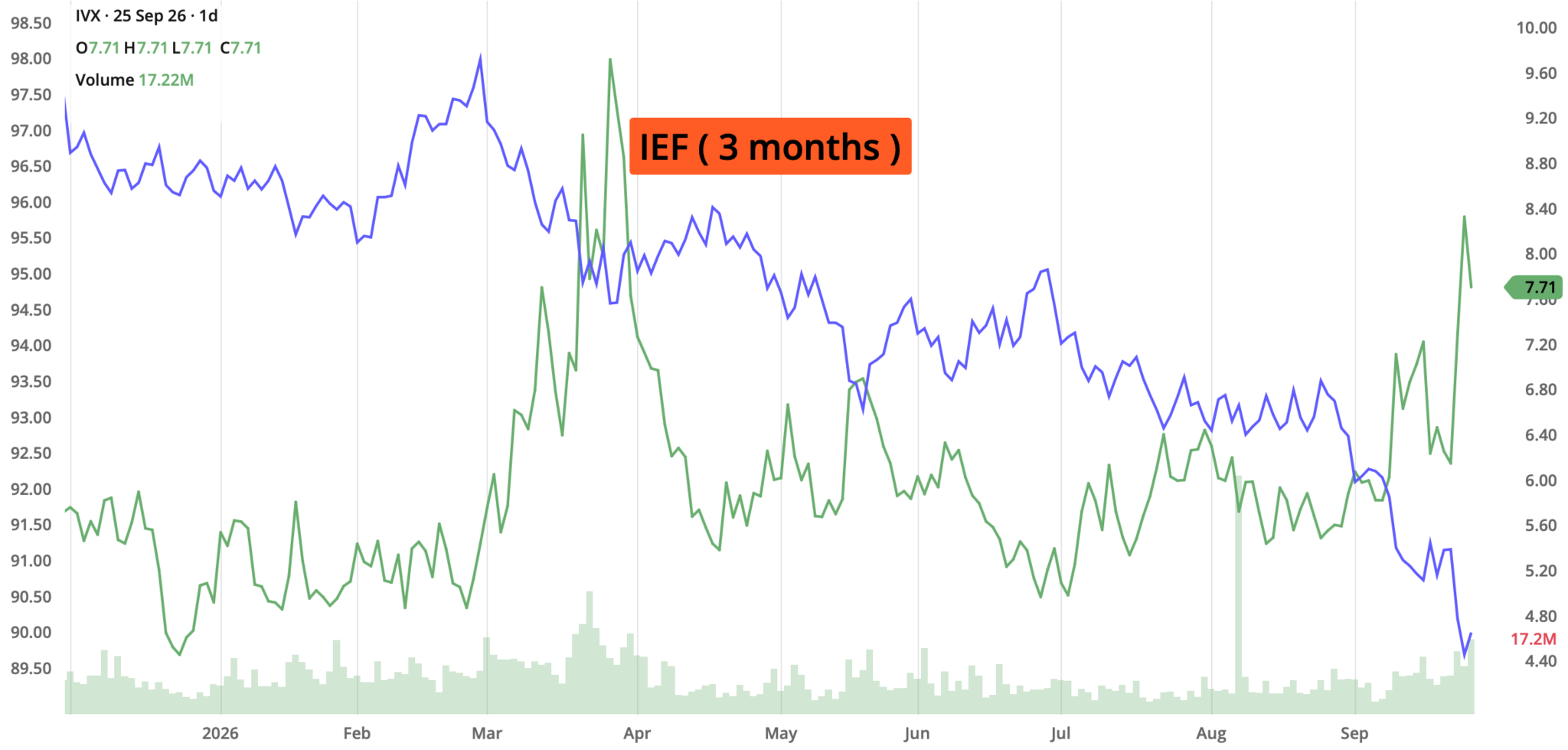
Fixed income remained under heavy downward price pressure. Soft demand at key U.S. Treasury note auctions pushed yields higher, keeping the 10-year benchmark pinned near multi-year highs around 5.00% and altering the hurdle rate for taking on equity risk.
Crude oil traded with heightened volatility, initially easing lower as early-week supply relief and pipeline repair updates helped cool immediate geopolitical risk premiums, though close correlations with macro inflation expectations kept energy markets a central focus for traders.
Precious metals experienced tight-range consolidation, balancing persistent counter-pressure from surging sovereign bond yields against steady safe-haven demand amidst elevated macroeconomic uncertainty.
Cryptocurrencies decoupled from traditional macro sluggishness, led by robust institutional inflows and strong spot ETF demand that propelled Bitcoin to break out firmly past the $85,000 threshold.
Strategy Corner
Based on last week's market movements, here are some trading ideas and option strategies for the readers' consideration. The positions can be scaled bigger (or smaller) to suit individual account size.
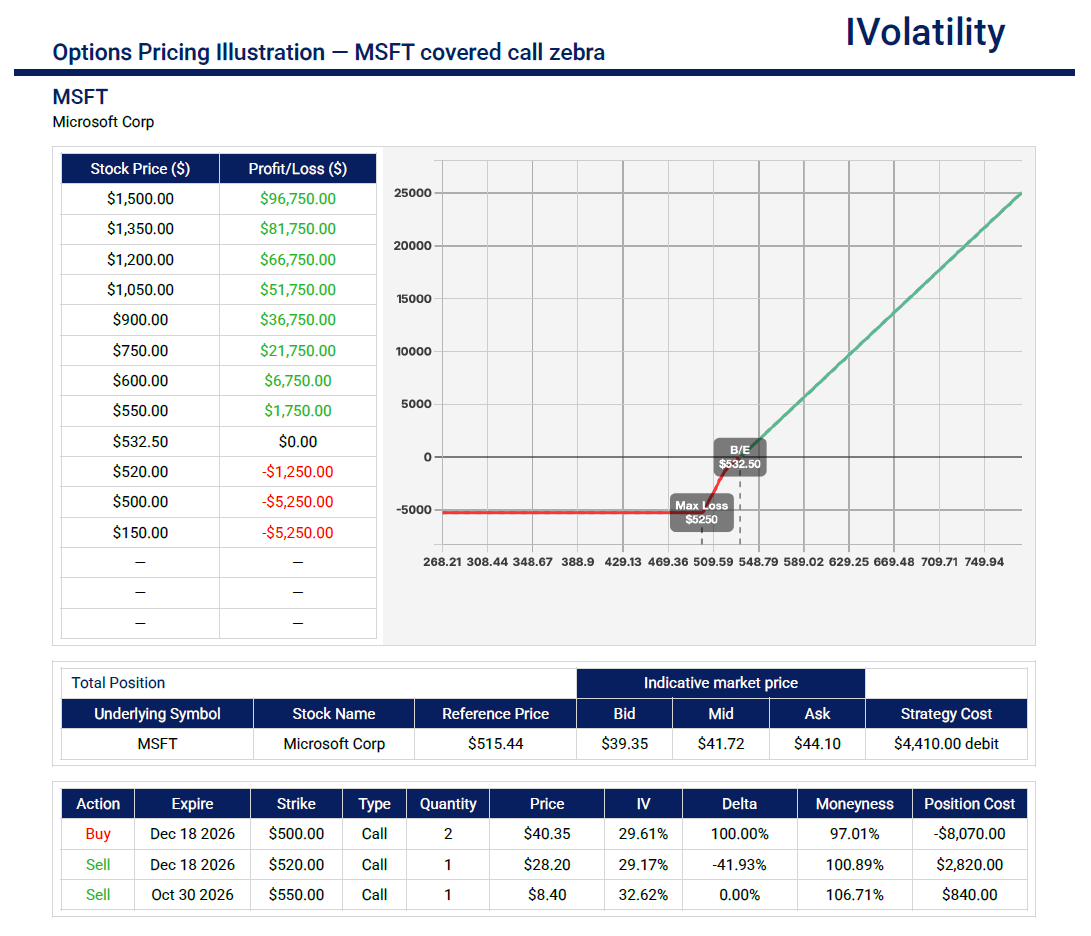
MSFT (closed around 516.11 on Friday, Sep 25th)
MSFT enters the final stretch of 2026 backed by robust enterprise acceleration, structural AI monetization, and unmatched cloud infrastructure demand. Despite macroeconomic cross-currents (such as elevated 10-year Treasury yields pushing toward 5.17%), Microsoft’s fortress balance sheet, 40%+ operating margins, and surging remaining performance obligations provide a high-conviction foundation for a bullish covered stock position.
- Structure: covered call zebra
- Position: In the Dec monthly expiration, buy two 500calls and sell one 550 call to create a synthetic stock position using a lot less capital than buying the stock outright.
In the Oct30 expiration, sell the 550call to cover the above stock position. - Total debit paid about $4200
- Max potential profit $5000 from the 500/550 call spread PLUS basically infinite profit from the single 500 call
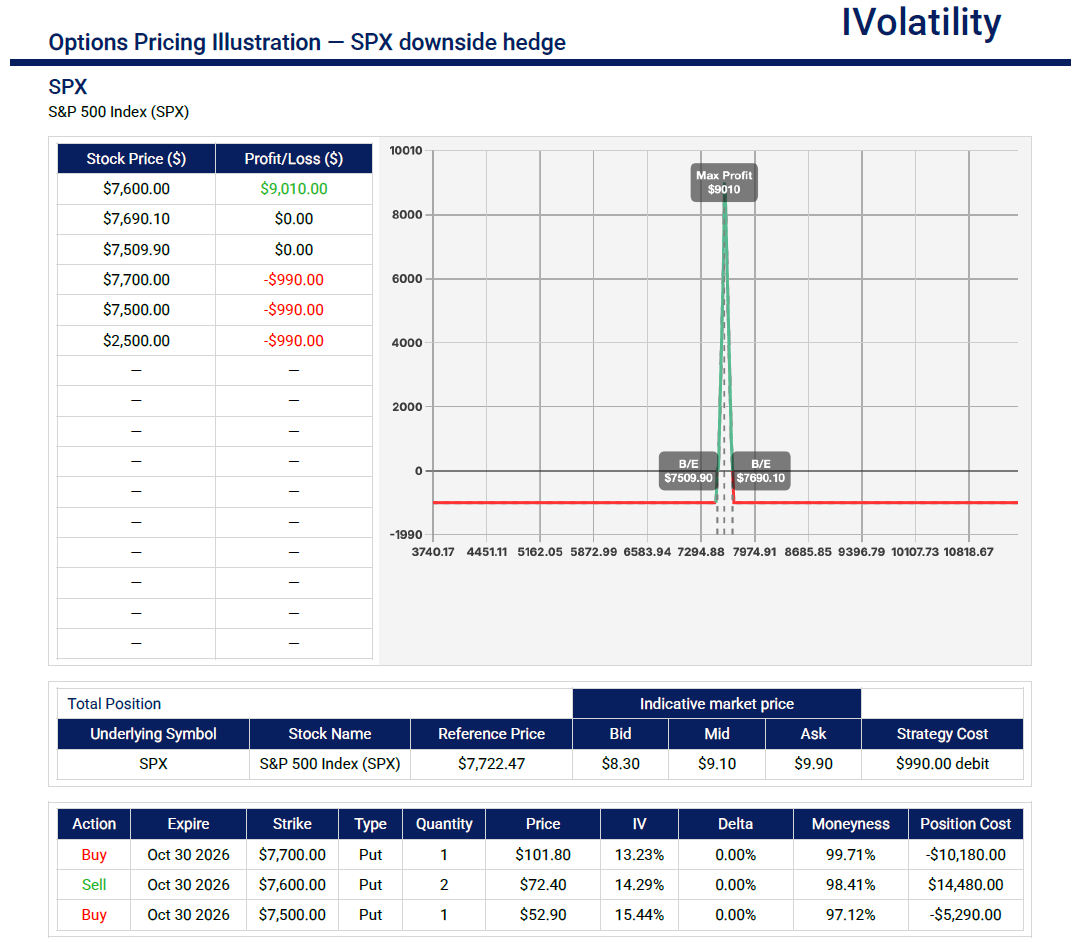
SPX (closed around 7743.41 on Friday, Sep 25th)
Historically, October is recognized as a month prone to heightened volatility spikes, liquidity shifts, and sharp, sentiment-driven corrections ("widow-maker" volatility months). If a trader would like to open a downside position that hedges their existing long portfolio.
- Structure: Put butterfly
- Position: In the Oct30 expiration, buy the 7700/7600(2)/7500 put butterfly
- Total cost about $950
- Max potential profit about $9000 if SPX pins 7600 at expiration
Movement of the Major Market Indices:
| INDEX | UP | DOWN |
| SPY | 0.86% | |
| QQQ | 2.28% | |
| IWM | 1.96% | |
| DIA | 1.35% | |
| GLD | 1.42% | |
| BTC/USD | 3.94% | |
| 10-year yield | 4.23% | |
| Crude Oil | -4.48% | |
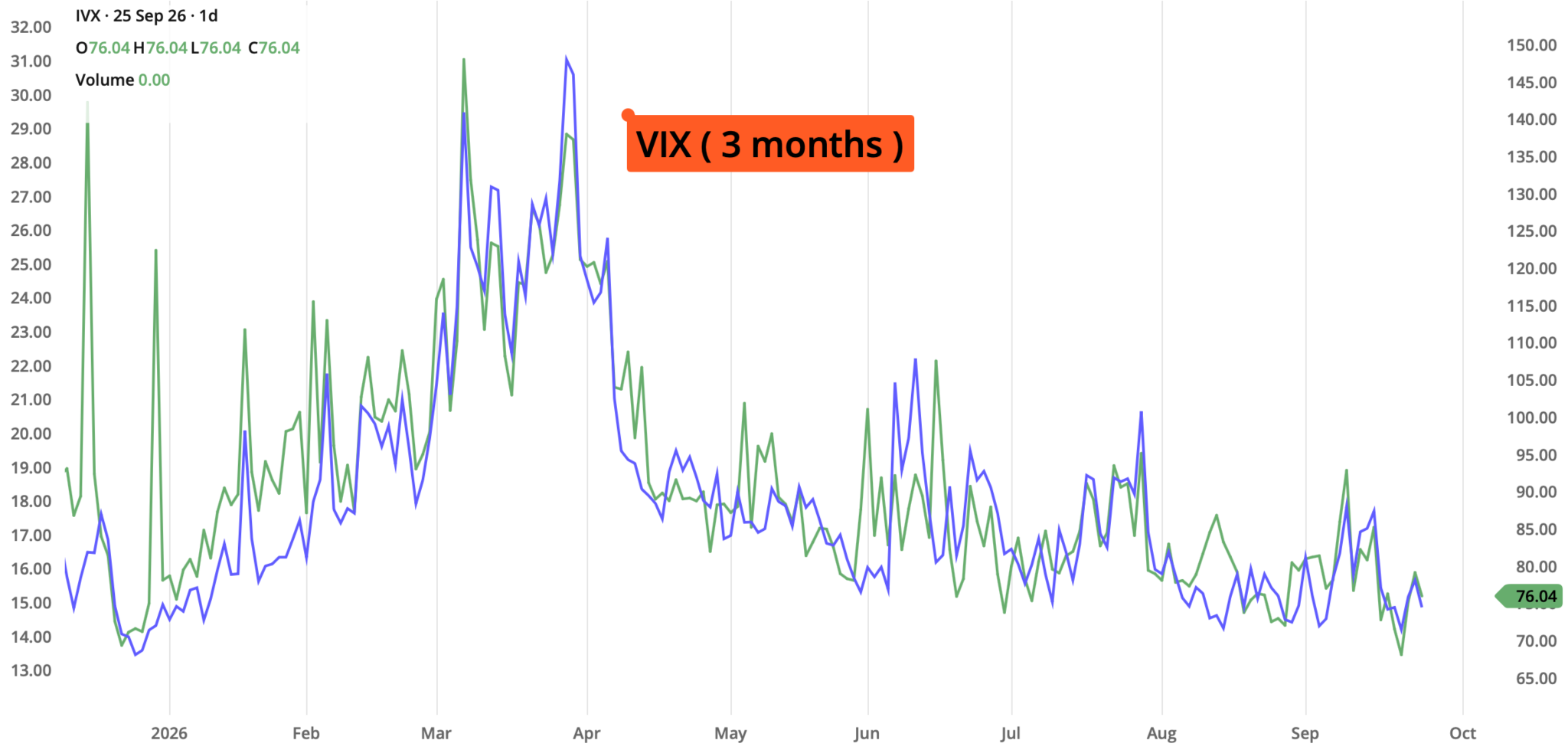
| VIX | -4.74% |
Movement of the Major Market Sectors:
| SECTOR | UP | DOWN |
| TECH (XLK) | 3.58% | |
| FINANCIALS (XL) | -0.52% | |
| INDUSTRIALS (XLI) | 1.26% | |
| ENERGY XLE | -1.79% | |
| HEALTHCARE (XLV) | 1.69% | |
| UTILITIES (XLU) | -3.09% | |
| MATERIALS (XLB) | -0.66% | |
| REAL ESTATE (XLRE) | -2.83% | |
| CONSUMER STAPLES (XLP) | -0.19% | |
| CONSUMER DISCRETIONARY (XLY) | -0.74% |
Notable Gainers Week of Sep 21st – Sep 25th
The notable winners for the week of September 21st–25th were heavily powered by a resurgence in high-growth technology sectors, robust institutional demand for digital assets, and selective bargain-hunting in beaten-down biopharmaceutical and semiconductor components. While broader macro indices navigated sticky 10-year Treasury yields near the 5.00% threshold, aggressive risk-on momentum in mega-cap tech, artificial intelligence infrastructure plays, and biotech names carved out substantial weekly gains.
Moderna (MRNA) surged over 29% over the week to lead large-cap performers, buoyed by heavy institutional accumulation and renewed momentum across healthcare value plays.
Datadog (DDOG) rallied nearly 17%, benefiting from a sharp rebound in high-multiple cloud and observability software as buyers stepped back into leading growth tech.
Qualcomm (QCOM) climbed over 13.5%, driven by strong tailwinds in mobile and semiconductor hardware following upbeat sector outlooks and heavy post-earnings interest.
Notable Losers Week of Sep 21st – Sep 25th
The notable losers for the week of September 21st–25th faced intense downward pressure driven by persistent macro headwinds—particularly benchmark 10-year U.S. Treasury yields lingering near multi-decade highs around the 5.00% threshold—alongside weak Treasury auction demand and heavy sector-specific rotations. While mega-cap tech and high-beta digital assets experienced pockets of relief, traditional cyclicals and rate-sensitive equities suffered as borrowing costs and energy cross-currents weighed on margins.
Gen Digital (GEN) tumbled roughly 25.5% over the week to emerge as one of the sharpest large-cap decliners, hit by aggressive profit-taking and valuation compression as tech-adjacent software components faced broad institutional trimming.
Cogent Communications Holdings (CCOI) dropped about 14.8%, continuing a volatile downward trend under the weight of higher capital expenditure burdens and tight financing conditions as long-term borrowing rates pressed higher.
MGM Resorts International (MGM) pulled back nearly 13.8%, pressured by growing discretionary consumer caution and a broader cooling trend across cyclical hospitality and entertainment operators as high-interest-rate realities squeezed household financial cushions.
Review selected market indices below:
Daily Notable Market Action
Market Summary for Monday, Sep 21st
Equities: Wall Street staged a powerful risk-on rally, with the S&P 500 jumping 1.5% to pull within striking distance of its all-time high. The tech-heavy QQQ surged 2.3% to a fresh record close, spearheaded by powerful momentum in semiconductor and artificial intelligence names.
Bonds: Treasury yields retreated from last week's multi-year peaks. The 10-year yield eased back down to 4.95% (falling about 4.5 basis points), providing welcome relief to equity valuations.
Oil: Crude benchmarks dropped sharply as diplomatic channels opened and tankers navigated the Strait of Hormuz; Brent crude slid 3.4% to settle near $100.34, while WTI dipped below $98.
Gold: Gold experienced modest downward pressure, easing slightly to settle near $4,353 an ounce as initial risk-on sentiment and steady yields blunted immediate safe-haven demand.
Digital assets: Bitcoin spearheaded a major crypto market surge, jumping over 5% to briefly cross the $85,000 threshold for the first time since January amid surging risk appetite and strong call-option open interest.
Market Summary for Tuesday, Sep 22nd
Equities: Major indices consolidated near their highs in a more mixed session. While QQQ notched another record high driven by ongoing AI and chip momentum, the DJIA faced downward pressure, weighed down by weakness in financial shares and oil majors following the extended slide in crude.
Bonds: Yields held relatively stable following Monday's relief, with the 10-year Treasury hovering in a tight range near 4.98% as investors balanced sticky inflation data against upcoming central bank commentary.
Oil: Crude prices extended their downward slide for a fifth consecutive session, touching a two-week low below $98 intraday on reports of potential supply re-openings before trimming losses to hover near the $100 line.
Gold: Precious metals faced a continued mild pullback, with spot gold drifting lower toward the $4,328 region as broader equity markets absorbed capital.
Digital assets: Digital assets extended their momentum, pushing the total crypto market capitalization past the historic $3 trillion milestone, aided by robust ETF inflows and Bitcoin testing near-term highs approaching $87,000.
Market Summary for Wednesday, Sep 23rd
Equities: Encountered minor mid-week caution; systematic equity strategies temporarily trimmed net-long exposures (e.g., S&P 500 tactical allocations pulling back slightly) as auction results loomed.
Bonds: Faced renewed downward price pressure (pushing yields upward) following soft demand at the U.S. Treasury's 5-year note auction.
Oil: Remained subdued, acting as a temporary cushion against runaway headline inflation fears, though the oil-rates correlation remained near 35-year highs.
Gold: Continued narrow-range consolidation, supported by buyers stepping in whenever yields pulled back from session highs.
Digital assets: Consolidated sideways, digesting the massive upside momentum from earlier in the week while tracking broader tech risk sentiment.
Market Summary for Thursday, Sep 24th
Equities: Advanced further, supported by robust corporate updates and upward target revisions in mega-cap tech and AI infrastructure names (such as Meta and specialized cloud/chip plays).
Bonds: Extended losses into a second consecutive day following a weak 7-year Treasury note auction, where foreign demand proved particularly disappointing, keeping the 10-year yield pinned near 19-year highs close to 5.0%.
Oil: Continued its downward trend on rising optimism regarding diplomatic and supply developments, helping alleviate immediate margin pressures on corporations.
Gold: Edged slightly higher as a counter-balance to ongoing soft demand in sovereign debt markets.
Digital assets: Exhibited high-beta correlation with high-growth tech equities, holding firm near multi-month highs.
Market Summary for Friday, Sep 25th
Equities: Edged higher at the open, keeping major indices on track for a stable weekly finish. Durable goods orders arrived flat month-over-month (up 0.3% excluding transportation), while consumer sentiment data rolled in. AI infrastructure and select semiconductor stocks outperformed.
Bonds: Gave back some of their steepest overnight yield spikes ahead of the weekend, though fixed income closed out a historically tight-correlated week against energy.
Oil: Settled lower for the week overall, driven by easing supply disruption fears.
Gold: Closed the week out comfortably above the $4,300/oz marker, securing a positive weekly performance despite persistent rate-hike headwinds
Digital assets: Closed out an exceptional week for crypto outperformance, with Bitcoin retaining almost all of its breakout gains above $85,000.
Notable Earnings Due for week of Sep 28th–Oct 2nd
As the third quarter draws to a close, the corporate earnings calendar shifts into a transitional lull ahead of the broader Q3 reporting cycle kick-off in October. However, the slate features several high-profile bellwethers spanning footwear retail, enterprise consulting, digital memory semiconductors, and leisure travel, providing crucial reads on consumer discretionary health and enterprise tech spending.
The actual earnings date may vary, so traders should confirm with their brokers. If a trader wishes to open a position to participate in earnings announcements, it is important to check whether the earnings are released BEFORE the markets open or AFTER the markets close on the date of earnings.
Mon, Sep 28th: MTN
Tue, Sep 29th: CCL / KMX
Wedn, Sep 30th: CAG / JBL / MU
Thu, Oct 1st: ACN / NKE
Fri, Oct 2nd: no notable earnings announcements expected
Economic Calendar Due for week of Sep 28th–Oct 2nd
As the calendar flips from September to October, the macroeconomic focus shifts squarely toward housing valuation trends, regional manufacturing sentiment, and the ultimate end-of-month stress test: the vital U.S. employment situation report. With global markets balancing shifting energy costs and monetary policy expectations, this week's data lineup will provide critical signals on consumer health and labor market resilience heading into the final quarter.
Monday, September 28th: No Major Domestic Releases
- A quiet start to the week allowing markets to digest prior-week positioning, preliminary regional data flows, and ongoing geopolitical headlines out of Europe and the Middle East.
Tuesday, September 29th:
- S&P/Case-Shiller Home Price Index:
Tracking residential real estate price trajectories across major metropolitan areas, offering essential insight into housing affordability, consumer net worth, and structural shelter inflation trends.
Wednesday, September 30th:
- Chicago PMI (Purchasing Managers Index)
A crucial regional manufacturing gauge acting as an early indicator for nationwide industrial health, supply chain pricing pressures, and midwestern commercial activity.
Thursday, October 1st:
- ISM Manufacturing Index & Construction Spending
The headline Institute for Supply Management manufacturing report delivers a definitive look at national factory orders, employment sub-indexes, and input cost inflation, accompanied by monthly outlays for public and private construction projects.
Friday, October 2nd:
- U.S. Employment Situation (Nonfarm Payrolls & Unemployment Rate)
The marquee economic event of the week. Headline job creation, wage growth figures, and the unemployment rate dictate market pricing for future Federal Reserve rate trajectories and directly move fixed-income, equity, and currency benchmarks globally.
Blue Sky Horizons
The Next-Gen Quantum Computing Frontier (part 2)
From Physical Qubits to Logical Realities
The discussion in last week's newsletter was largely centered around raw physical qubit counts and the theoretical race toward supremacy. Over the past several months, however, the industry has crossed a critical engineering Rubicon. The narrative has shifted definitively away from noisy, raw hardware scale and toward logical qubits and fault-tolerant error correction.
Recent breakthroughs across superconducting, trapped-ion, and neutral-atom architectures have proven that logical error rates can actively decrease as lattice sizes expand—matching long-held theoretical scaling curves. Enhanced by optimized quantum low-density parity-check (qLDPC) codes and real-time decoding frameworks operating in sub-millisecond windows, the industry is transitioning from a physics experiment into a scalable engineering discipline.
Rather than acting as standalone replacements for classical supercomputers, quantum systems are carving out their immediate future as highly specialized accelerators within hybrid quantum-classical workflows.
- HPC Integration: Major hardware and cloud ecosystems—exemplified by recent enterprise collaborations integrating neutral-atom systems directly into high-performance computing (HPC) supercomputing stacks—are allowing quantum units to handle complex sub-problems while classical infrastructure manages general compute load.
- AI & Quantum Synergy: The pairing of quantum processors with GPU-accelerated classical environments is accelerating simulation timelines for molecular chemistry, materials science, and enterprise portfolio optimization.
For forward-looking sectors spanning logistics, pharmaceuticals, finance, and cryptography, the strategic focus is moving toward post-quantum readiness. Organizations are no longer waiting for universal fault-tolerant hardware to become ubiquitous; instead, they are auditing data pipelines, testing cloud-accessible quantum-adjacent middleware, and deploying post-quantum cryptography standards today to protect against future decryption threats. The horizon is fast approaching where quantum capability shifts from an R&D talking point to a distinct competitive moat.
TAKEAWAYS For self-directed investors building exposure to the quantum ecosystem, tracking market leaders requires balancing high-beta pure-play innovators against foundational mega-cap enterprises. Pure-play hardware developers like IonQ Inc. (NYSE: IONQ) (specializing in trapped-ion scaling and high gate fidelity), Rigetti Computing Inc. (NASDAQ: RGTI) (advancing superconducting circuits), and D-Wave Quantum Inc. (NYSE: QBTS) (pioneering quantum annealing for optimization problems) offer direct leverage to technological breakthroughs but carry heightened volatility. Concurrently, large-cap anchors such as International Business Machines (NYSE: IBM), Alphabet Inc. (NASDAQ: GOOGL), and Microsoft Corp. (NASDAQ: MSFT) provide stable enterprise integration, robust cloud monetization pipelines (such as Azure Quantum), and deep R&D moats that anchor the sector against speculative drawdowns.
Thank you for reading. Until next week's close,
Have a safe and productive Trading week!
Fauzia Timberlake
About the Author: Fauzia Timberlake is a professional options coach and financial strategist specializing in risk management and portfolio architecture for self-directed investors. She is Founder and Managing Partner of Option Engines.
Questions / Comments
We're here to serve IVolatility users and we welcome your questions or feedback about the option strategies discussed in this newsletter. If there is something you would like us to consider and/or analyze, we're always open to your suggestions. Use support@ivolatility.com.
Previous issues are located under the Trade Ideas tab on our website.