Navigating the AI Reality Check: Inflation Bites and Tech Blinks
By Fauzia Timberlake, personal coach for trading options
October 19, 2026
Macro Overview of Markets
The defining catalyst governing capital market movements during the week of October 12th–16th was a hotter-than-expected September consumer price index (CPI) print, which collided with intensifying C-suite scrutiny and institutional profit-taking surrounding artificial intelligence infrastructure valuations and capital expenditure cycles. This combination of sticky inflation data and high-beta growth fatigue triggered sharp cross-asset adjustments, driving heavy liquidation across technology shares while prompting selective defensive rotation.
U.S. equities experienced severe internal divergence, defined by a brutal correction in high-beta technology and artificial intelligence infrastructure plays offset by capital flight into defensive strongholds. While mega-cap growth and semiconductor shares faced aggressive institutional profit-taking—pulling the Nasdaq Composite down sharply—defensive sectors like healthcare, consumer staples, and blue-chip industrials provided a stabilizing cushion, leaving the S&P 500 lower on the week.
(S&P 500 Close: 7,659.44)
Fixed-income markets remained under intense downward pressure as sticky inflation readings forced market participants to price in a prolonged "higher-for-longer" rate environment. The 10-year Treasury yield surged past 5.3% intraday following the mid-week CPI release before paring some gains, holding firmly near elevated cycle boundaries and keeping duration assets on the defensive.
(10-Year Treasury Yield Close: 5.10%)
Crude oil maintained firm upward momentum, breaking through and holding above the psychological $100-per-barrel threshold. Supported by persistent Middle East supply friction, geopolitical risk premiums, and resilient industrial demand, energy markets shrugged off broader macroeconomic crosscurrents.
(Crude Oil Close: $101.41)
Precious metals demonstrated notable underlying strength, with gold trading firmly near record highs. Despite headwinds from surging bond yields and a firmer U.S. dollar, safe-haven demand driven by geopolitical uncertainties and inflation hedging successfully absorbed profit-taking pullbacks.
(Gold Close: $4,180.00)
Digital assets consolidated within a tight trading range following recent volatility. Bitcoin and major altcoins hovered near immediate support levels with subdued institutional and retail volumes, digesting recent regulatory headlines while tracking broader risk-off sentiment in equities.
(Bitcoin Close: $81,381.39)
Strategy Corner
Based on last week's market movements, here are some trading ideas and option strategies for the readers' consideration. The positions can be scaled bigger (or smaller) to suit individual account size.
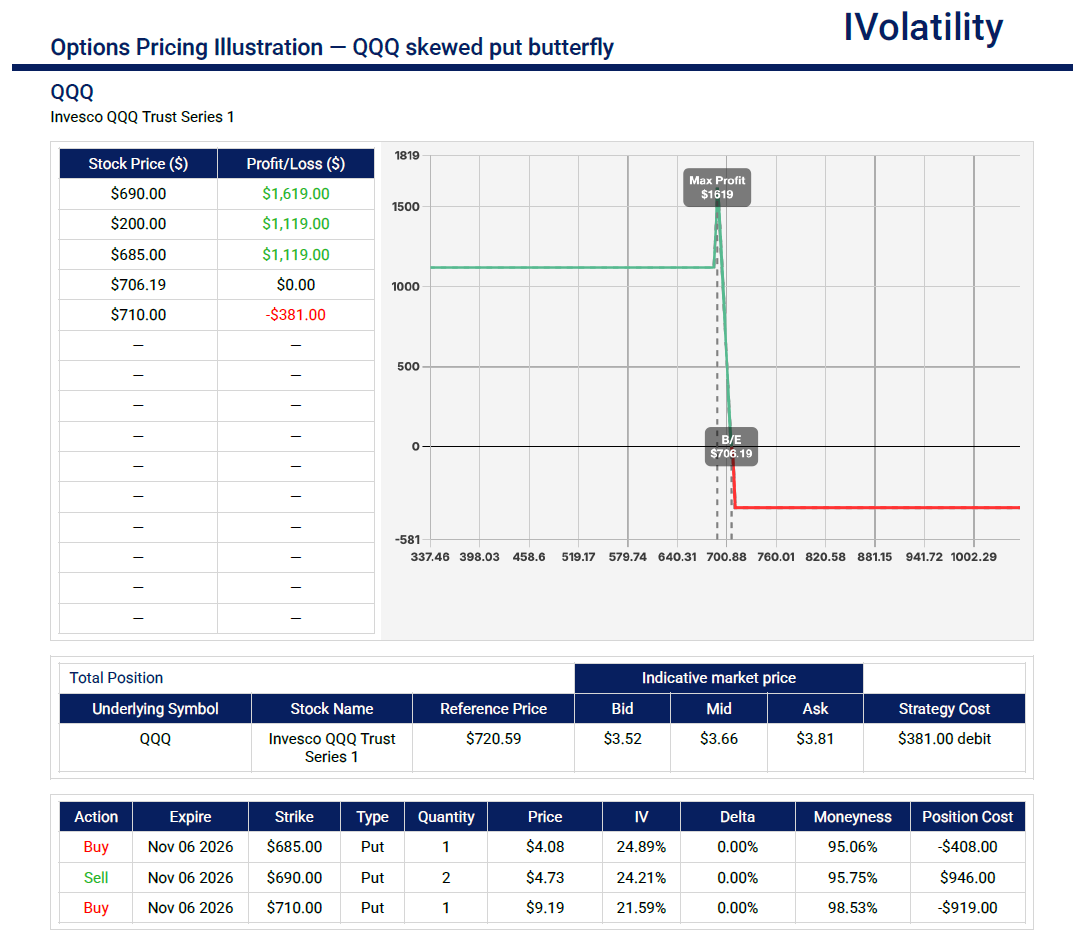
QQQ (closed around 709.86 on Friday, Oct 16th)
As markets head toward the first week of November 2026, coinciding directly with the U.S. midterm elections (Tuesday, November 3), the macroeconomic and structural backdrop favors a tactical bearish or defensive stance on QQQ. While election weeks frequently introduce heightened intraday whipsaws, several converging headwinds make long-duration, high-beta technology and growth equities particularly vulnerable to institutional liquidation and valuation compression.
- Structure: skewed PUT butterfly
- Position: In the Nov 6th expiration, buy one 710put / sell two 690puts / buy one 685put
- Total debit paid about $400
- Max potential value of $1500 if QQQ pins the 690 strike upon expiration
- No downside risk
SLV (closed around 51.51 on Friday, Oct 16th)
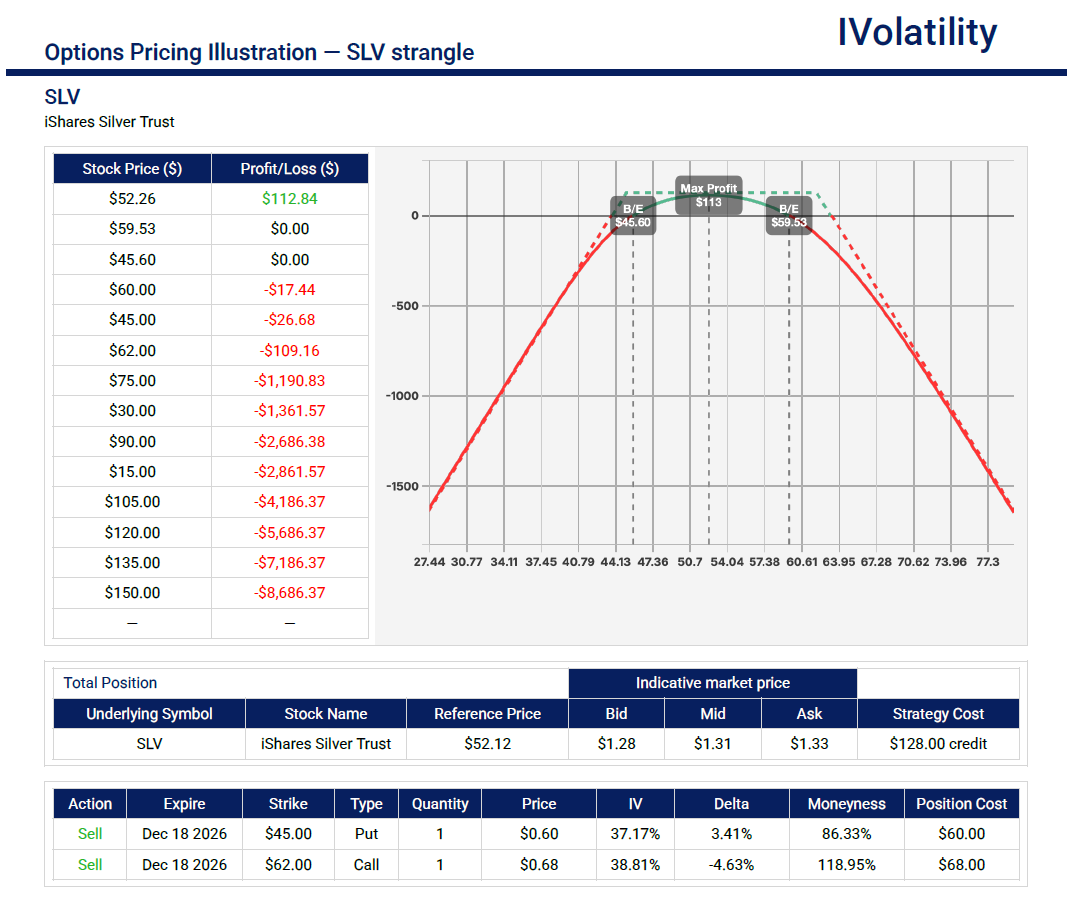
For self-directed options traders seeking to capture premium in precious metals without taking a directional bet, a short strangle on the iShares Silver Trust (SLV>) targeting the December monthly expiration offers a compelling structure. With silver caught between robust safe-haven demand (correlated with gold holding near record highs) and mixed industrial demand cross-currents, SLV is primed for range-bound consolidation through the end of the fourth quarter.
- Structure: short strangle
- Position: In the December 18th expiration, sell the 45/62 strangle
- Probability of Profit about 68%
- Credit collected about $130 / contract
- Breakevens around 44 and 63
Movement of the Major Market Indices:
| INDEX | UP | DOWN |
| SPY | -1.97% | |
| QQQ | -5.22% | |
| IWM | -2.99% | |
| DIA | 0.52% | |
| GLD | -0.71% | |
| BTC/USD | -2.39% | |
| 10-year yield | -2.67% | |
| Crude Oil | 7.74% | |
| VIX | 29.82% |
Movement of the Major Market Sectors:
| SECTOR | UP | DOWN |
| TECH (XLK) | -7.37% | |
| FINANCIALS (XL) | 1.20% | |
| INDUSTRIALS (XLI) | -0.75% | |
| ENERGY XLE | 3.63% | |
| HEALTHCARE (XLV) | 3.04% | |
| UTILITIES (XLU) | 1.81% | |
| MATERIALS (XLB) | 3.41% | |
| REAL ESTATE (XLRE) | 1.32% | |
| CONSUMER STAPLES (XLP) | 4.83% | |
| CONSUMER DISCRETIONARY (XLY) | -2.90% |
Notable Gainers Week of Ocr 12th – 16th
Despite broad equity weakness and growth sector volatility during the week of October 12th–16th, resilient buying interest emerged across defensive strongholds, select consumer plays, and wireless infrastructure REITs. Driven by safety-seeking capital rotation, steady dividend yield demand, and specific positive operational catalysts, several prominent names delivered notable weekly gains, counterbalancing the heavy selling seen across high-beta technology.
- Bath & Body Works, Inc. (BBWI) jumped just over 16%, leading consumer discretionary gainers following an upbeat operational outlook and strong value-oriented retail positioning.
- Fair Isaac Corporation (FICO) climbed about 15.5%, boosted by resilient institutional demand for software scoring and analytics platforms.
- Crown Castle Inc. (CCI) surged over 15.5%, anchored by robust institutional inflows into wireless communications infrastructure and digital network real estate.
- American Tower Corporation (AMT) rallied over 15.5%, benefiting alongside peers from accelerating global data transmission demand and defensive sector positioning.
- TransUnion (TRU) advanced over 13. %, gaining solid upside traction as credit bureau and risk management data volumes proved resilient.
- Kinder Morgan, Inc. (KMI) rose just over 4%, attracting steady energy income buyers amid elevated natural gas transport volumes and firming commodity price floors.
Notable Losers Week of Ocr 12th – 16th
The week of October 12th–16th brought a sharp correction to the technology and semiconductor sectors, driven by cautious C-suite commentary regarding high-flying AI valuations, a hotter-than-expected September inflation print, and aggressive institutional profit-taking. As capital rapidly rotated out of high-beta growth components and into defensive havens like consumer staples and healthcare, several prominent large-cap techs, hardware, and industrial names experienced steep valuation pullbacks.
- Intel Corporation (INTC) tumbled roughly 12%, hit by broad semiconductor weakness and intensifying sentiment headwinds across legacy chipmakers amid heavy institutional trimming.
- Advanced Micro Devices (AMD) dropped almost 11%, succumbing to aggressive profit-taking across the semiconductor complex following cautious commentary on near-term AI hardware deployment timelines.
- Oracle Corporation (ORCL) fell nearly 9.5%, experiencing sharp valuation compression as tech-heavy growth names faced broad-based liquidation and risk-off sentiment.
- Cisco Systems (CSCO) slid just over 9%, tracking the wider rout in enterprise networking and infrastructure plays amid heightened macro jitters.
- Broadcom Inc. (AVGO) pulled back just over 9%, weighed down after executive warnings regarding market exuberance for artificial intelligence investments triggered a severe sector-wide reassessment.
- Caterpillar Inc. (CAT) retreated nearly 8.5%, pressured by lingering margin anxieties across capital-intensive industrials as rising bond yields and growth concerns weighed on cyclical segments.
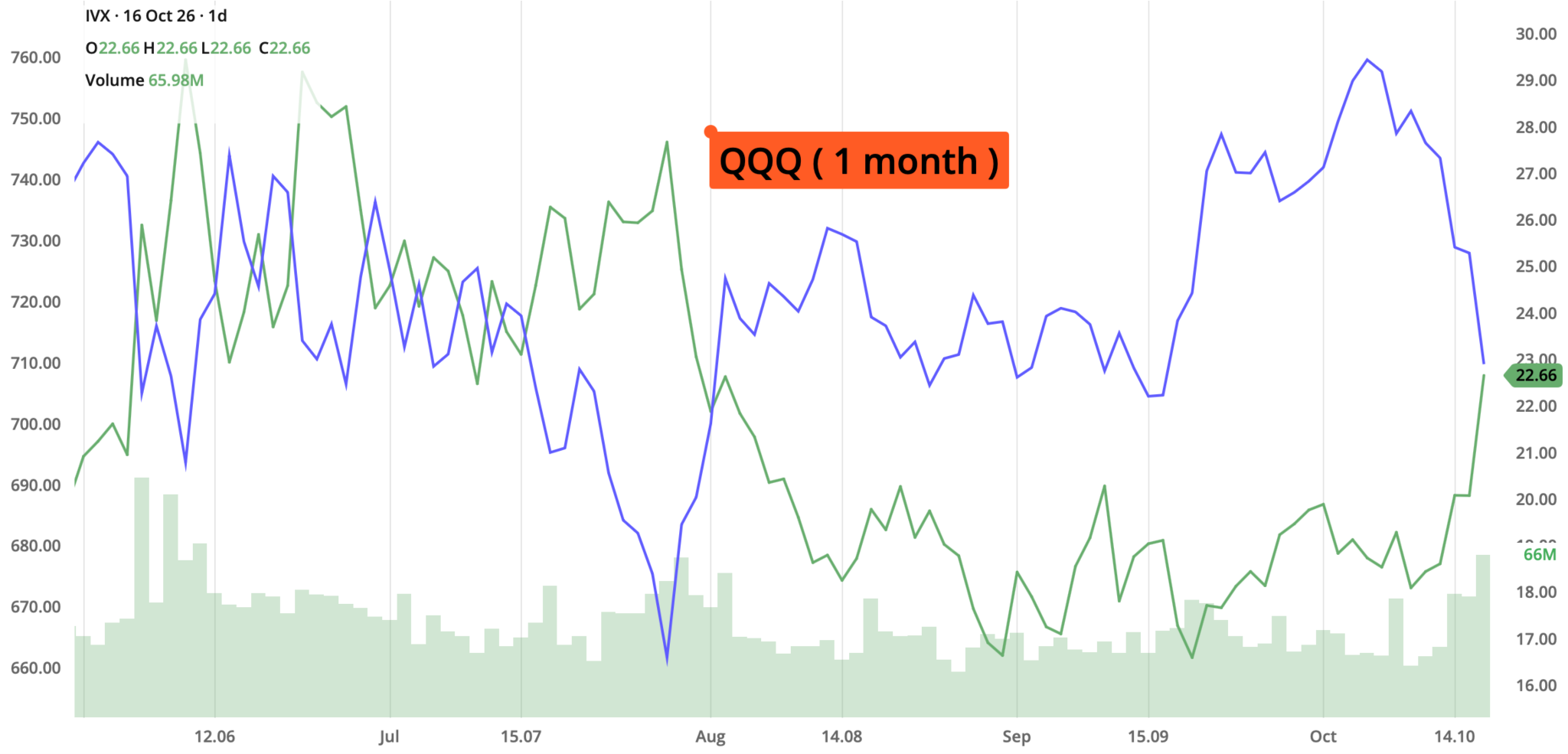
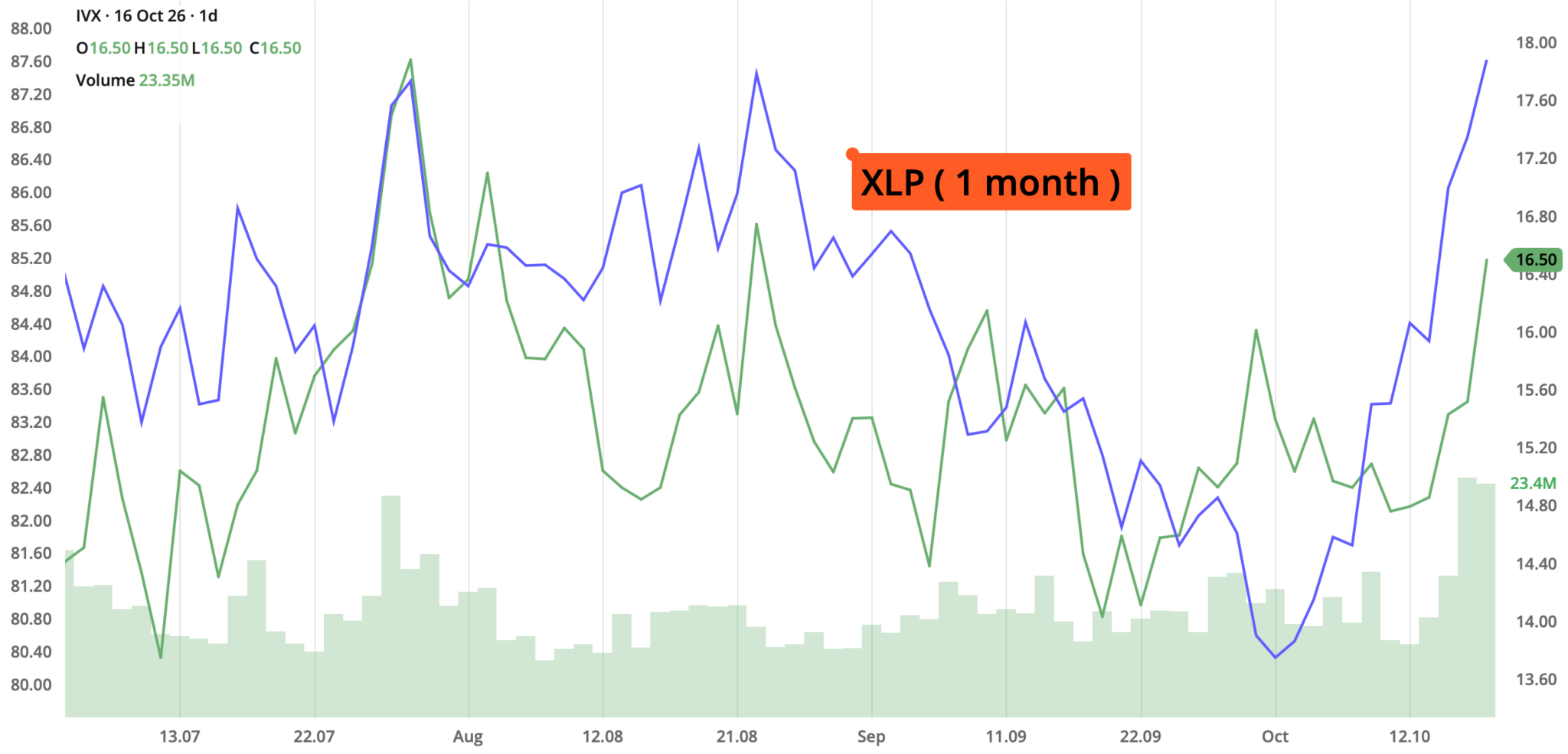
Review selected market indices below:
Daily Notable Market Action
Market Summary for Monday, Oct 12th
Equities: Equities started the week under mild pressure following cautious commentary from semiconductor executives regarding AI valuations.
(S&P 500 Close: 7,807.24)
Bonds: Fixed-income markets were closed in observance of Columbus Day / Indigenous Peoples' Day.
(10-Year Treasury Yield Close: Market Closed)
Oil: Crude oil gained traction amid early-week supply-chain and Middle East friction assessments.
(Crude Oil Close: $98.15)
Gold: Gold traded in a tight, holiday-thinned range near recent consolidation levels.
(Gold Close: $4,120.50)
Digital assets: Digital assets consolidated within established ranges amid muted holiday volume.
(Bitcoin Close: $82,450.00)
Market Summary for Tuesday, Oct 13th
Equities: Equities consolidated as investors digested early third-quarter bank earnings and positioned ahead of key inflation data.
(S&P 500 Close: 7,805.45)
Bonds: Treasury yields ticked upward ahead of the impending consumer price index release.
(10-Year Treasury Yield Close: 5.22%)
Oil: Crude oil pushed past key technical resistance levels on elevated geopolitical risk assessments.
(Crude Oil Close: $99.40)
Gold: Gold experienced mild profit-taking pullbacks under the weight of firming yields.
(Gold Close: $4,095.20)
Digital assets: Digital assets pulled back toward immediate support following fresh regulatory headline chatter.
(Bitcoin Close: $80,120.00)
Market Summary for Wednesday, Oct 14th
Equities: A hotter-than-expected September CPI print sparked aggressive institutional liquidation across high-beta growth and tech shares.
(S&P 500 Close: 7,718.94)
Bonds: Treasury yields surged intraday to multi-week highs before paring some gains by the close.
(10-Year Treasury Yield Close: 5.19%)
Oil: Crude oil sustained upward momentum, firmly testing the $100-per-barrel threshold.
(Crude Oil Close: $100.85)
Gold: Gold saw safe-haven inflows offsetting the pressure from higher yields.
(Gold Close: $4,115.80)
Digital assets: Digital assets traded defensively in tandem with broader risk-off equities.
(Bitcoin Close: $79,850.00)
Market Summary for Thursday, Oct 15th
Equities: Markets staged a tentative relief rally as solid wholesale price data helped stabilize sentiment in select sectors.
(S&P 500 Close: 7,744.10)
Bonds: Treasury yields retreated from intraday peaks, offering temporary relief to fixed-income assets.
(10-Year Treasury Yield Close: 5.09%)
Oil: Crude oil paused its advance following discussions surrounding coordinated reserve releases.
(Crude Oil Close: $99.70)
Gold: Gold staged a technical rebound off weekly support levels amid fluctuating rate expectations.
(Gold Close: $4,153.20)
Digital assets: Digital assets bounced alongside broader risk asset stabilization.
(Bitcoin Close: $81,250.00)
Market Summary for Friday, Oct 16th
Equities: Heavy selling returned to the technology sector over AI capex and valuation concerns, though defensive rotation cushioned blue chips.
(S&P 500 Close: 7,659.44)
Bonds: Treasury yields held steady near their weekly lows as investors locked in safe-haven duration.
(10-Year Treasury Yield Close: 5.10%)
Oil: Crude oil closed above $101 per barrel for the first time on the week amid persistent supply concerns.
(Crude Oil Close: $101.41)
Gold: Gold settled firm near record highs as safe-haven demand persisted into the weekend.
(Gold Close: $4,180.00)
Digital assets: Digital assets consolidated previous sessions' recovery with subdued end-of-week retail participation.
(Bitcoin Close: $81,381.39)
Notable Earnings Due for week of Oct 19th–23rd
Third-quarter earnings season shifts into high gear next week. Over 200 large-cap and mid-cap companies are scheduled to report, highlighted by mega-cap technology and consumer powerhouses alongside major industrial, defense, and semiconductor leaders. The marquee session of the week arrives Wednesday after the market close, when Meta Platforms and Tesla deliver results that could significantly set the tone for broader market sentiment and tech sector implied volatility.
The actual earnings date may vary, so traders should confirm with their brokers. If a trader wishes to open a position to participate in earnings announcements, it is important to check whether the earnings are released BEFORE the markets open or AFTER the markets close on the date of earnings.
Mon, Oct 19: AGNC / CLF / FITB / STLD / ZION
Tue, Oct 20: ALK / CB / COF / GE / GM / HAL / HAS / ISRG / MMM / NFLX / NOC / RTX / UAL
Wedn, Oct 21: ABT / CSX / DHR / IBM / LRCX / LVS / META / PM / T / TMO / TSLA / TXN
Thu, Oct 22: AAL / BE / BX / CMCSA / DECK / DOW / NEM / NOK / PG / SPOT / UNP / VLO / WDC
Fri, Oct 23: AXP
Economic Calendar Due for week of Oct 19th–23rd
The economic calendar for the week of October 19th–23rd shifts focus toward housing sector health, short-term government debt demand, and early business sentiment indicators through preliminary purchasing managers' indices. While major tier-one inflation reports are absent, the slate will offer vital mid-quarter visibility into consumer resilience and manufacturing momentum.
Monday, October 19th
- NAHB Housing Market Index & Treasury Bill Auctions
These indicators gauge home builder sentiment and short-term government borrowing yields. Shifts in builder confidence reflect prevailing mortgage rate pressures and housing demand, while short-term bill auctions provide immediate insight into fixed-income liquidity and sovereign debt demand.
Tuesday, October 20th:
- Housing Starts and Building Permits
These metrics measure residential construction activity and future building authorizations. Robust housing data signals sustained strength in real estate and material sectors, whereas unexpected contractions can highlight broader consumer caution under elevated borrowing costs.
Wednesday, October 21st
- Conference Board Leading Economic Index & Atlanta Fed GDPNow
The leading index provides a composite view of economic direction over the coming months, while the GDPNow model offers a real-time tracking estimate for current-quarter economic growth. Markets closely monitor these updates to gauge the ongoing trajectory of the broader macroeconomic cycle.
Thursday, October 22nd
- Initial and Continuing Jobless Claims
Weekly unemployment insurance claims serve as the premier high-frequency indicator of labor market health. Consistent stability in claims reinforces economic soft-landing expectations, whereas sudden upward spikes can trigger immediate defensive positioning across equity indices.
Friday, October 23rd
- S&P Global Flash US Manufacturing and Services PMIs
These preliminary sentiment indices offer the earliest comprehensive look at business activity across the private sector. Readings above the expansion threshold signal sustained economic momentum, while unexpected contractions can rapidly shift rate expectations across broader financial markets.
Blue Sky Horizons
The Rise of the NeoCloud Economy
The infrastructure driving the artificial intelligence boom is undergoing a structural shift. While legacy hyperscalers like Amazon Web Services (AWS), Microsoft Azure, and Google Cloud Platform (GCP) continue to offer massive suites of general-purpose cloud services, a specialized class of alternative providers—termed "NeoClouds"—has rapidly carved out a distinct domain. Unlike traditional cloud providers designed for broad software architectures, NeoClouds build high-performance, GPU-first environments engineered specifically for large language model (LLM) training, high-concurrency AI inference, and massive cluster computing.
By bypassing legacy virtualized infrastructure, these specialized GPU clouds offer frontier AI labs and enterprise developers direct, bare-metal access to top-tier hardware (such as NVIDIA's Hopper and Blackwell platforms) with optimized networking, minimal egress friction, and higher compute density. The economic model behind NeoClouds relies on aggressive infrastructure scale: securing large power allocations, entering into multi-billion-dollar long-term capacity contracts with major AI labs, and utilizing structured debt to deploy hardware rapidly. While this model brings elevated capex and interest exposure during scaling phases, it has created a multi-billion-dollar parallel cloud ecosystem operating alongside classic IT infrastructure.
TAKEAWAYS
For self-directed investors building coverage and tracking lists in AI infrastructure, NeoClouds represent a crucial secondary tier beyond direct chip designers and legacy hyperscalers. Publicly traded pure-play and emerging NeoCloud operators such as CoreWeave (CRWV) and Nebius Group (NBIS) offer direct exposure to enterprise GPU demand, revenue backlogs, and cluster utilization rates. Beyond pure-play cloud hosts, investors should also track energy and digital-infrastructure pivots like IREN or power/campus developers like Crusoe, alongside private category leaders like Lambda as they approach public markets. When evaluating names in this basket, key underlying metrics to monitor include total contracted power capacity (GW), revenue backlog conversion, customer concentration, and interest coverage ratios against depreciating hardware assets.
Thank you for reading. Until next week's close,
Have a safe and productive Trading week!
Fauzia Timberlake
About the Author: Fauzia Timberlake is a professional options coach and financial strategist specializing in risk management and portfolio architecture for self-directed investors. She is Founder and Managing Partner of Option Engines.
Questions / Comments
We're here to serve IVolatility users and we welcome your questions or feedback about the option strategies discussed in this newsletter. If there is something you would like us to consider and/or analyze, we're always open to your suggestions. Use support@ivolatility.com.
Previous issues are located under the Trade Ideas tab on our website.