CapEx Headwinds and Crude Shock
By Fauzia Timberlake,
personal coach for trading options
July 27, 2026
Market Roundup & The Week in Review
U.S. equities faced a jittery, risk-off week as a heavy wave of Big Tech earnings collided with renewed geopolitical friction and surging energy prices. While early momentum tried to support indices heading into the kickoff of the second-quarter reporting season, sentiment pivoted sharply as investors confronted a potent mix of microeconomic capex anxieties and macroeconomic inflation jitters.
The primary fundamental catalyst arrived mid-week with high-profile reports from mega-cap bellwethers like Alphabet and Tesla. While headline earnings and revenues largely met or exceeded consensus expectations, Wall Street zeroed in on escalating capital expenditure forecasts. Alphabet's push to lift its spending targets alongside Tesla's margin pressures reignited fierce debate over whether massive, front-loaded artificial intelligence investments will deliver near-term returns. The resulting tech distribution dragged the Nasdaq and S&P 500 lower, putting a definitive damper on growth-oriented sectors.
Compounding equity headwinds, energy markets experienced a violent flare-up. Escalating Middle East tensions—highlighted by supply disruption fears and regional clashes—sent Brent crude surging past the key $100-a-barrel threshold for the first time in months. The sudden spike in energy costs injected fresh fears of sticky inflation and potential monetary policy tightening, driving bond yields higher globally and prompting a defensive rotation across broader asset classes.
The defensive posture was clearly reflected beneath the surface of the major indices. Growth-heavy and high-beta pockets bore the brunt of the selling pressure, whereas select value and traditional sectors showed relative resilience. Fixed income markets felt the squeeze of rising oil-driven rate expectations, with core yields pressing toward multi-month highs before finding some stability into Friday's close.
Strategy Corner
Based on this week's market movements, here are some trading ideas and option strategies for the readers' consideration. The positions can be scaled bigger (or smaller) to suit individual account size.
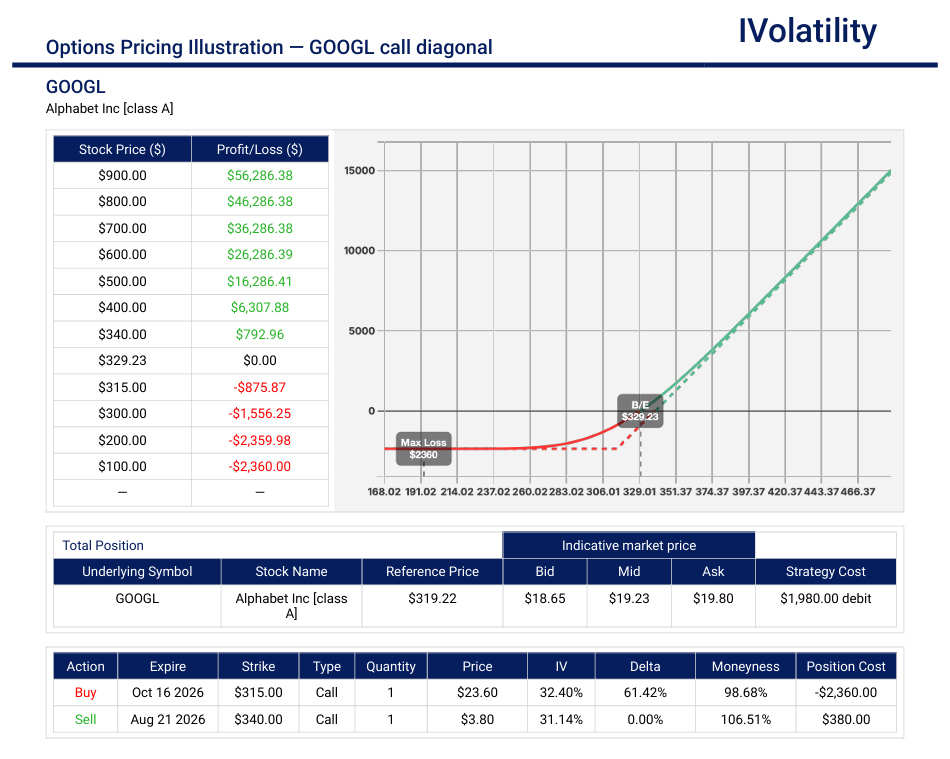
GOOGL (closed at 319.77 on Friday, July 24th)
Following the broader tech sector pullback and earnings-driven volatility that swept through the market, GOOGL experienced a sharp downward re-pricing—closing the week seriously down from levels above $350 earlier in the month.
While headline angst regarding front-loaded AI capital expenditures created a knee-jerk risk-off reaction across mega-cap tech, this flush might present an exceptional structural entry for patient, bullish traders. A Long Call Diagonal Spread offers a capital-efficient vehicle to position bullishly over time while lowering cost basis through systematic rolling of the short call in the front weeks/months.
Outlook: leaning bullish
Strategy: Call Diagonal
In the Oct monthly expiration, BUY a just ITM call and SELL the 25delta call in the front month.
Debit paid about $1950 for the 315/340 diagonal
Max potential value could be in excess of $2500
DELL (closed at 437.45 on Friday, July 24th)
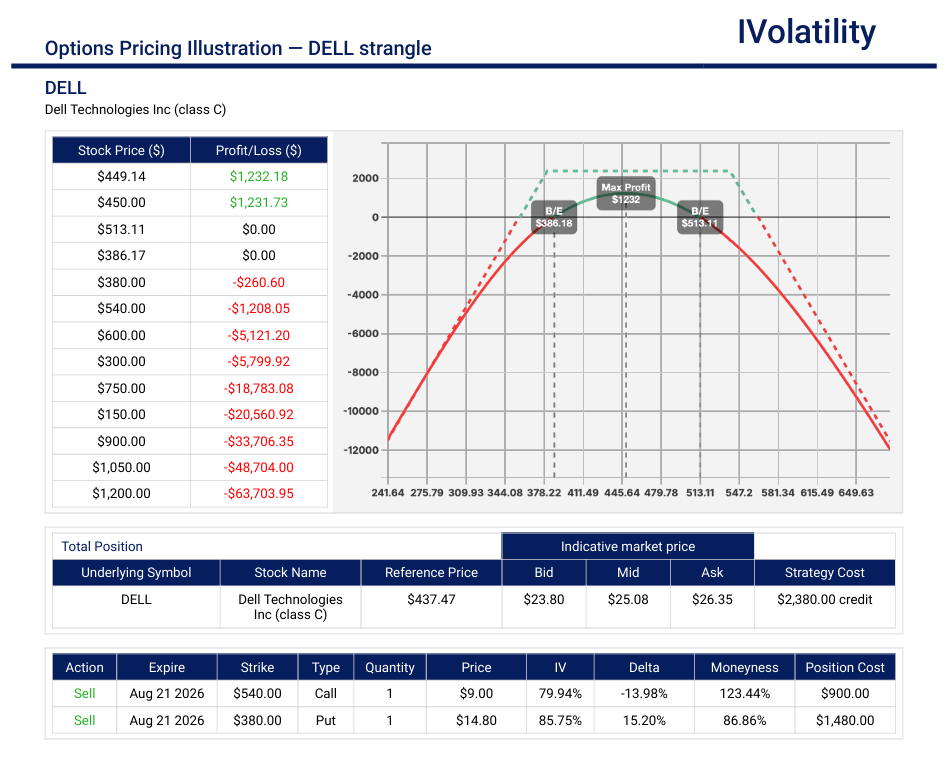
As DELL heads toward its upcoming Q2 earnings announcement in late August, the stock seems to continue to command intense market attention. Following an extraordinary multi-month surge driven by AI server optimism and its recent inclusion in the Dow Jones Industrial Average, DELL exhibits a type of hyper-liquid, high-beta profile where options are richly priced.
Outlook: neutral through the week approaching earnings
Strategy: strangle, leaning ever so slightly bullish
In the August monthly expiration, sell the 380/540 strangle
Premium collected about $2500 /contract.
Probability of profit around 69%
Breakevens around 255 and 565
Movement of the Major Market Indices:
| INDEX | UP | DOWN |
| SPY | -0.56% | |
| QQQ | -2.59% | |
| IWM | -1.30% | |
| DIA | -0.62% | |
| GLD | 1.12% | |
| BTC/USD | -0.91% | |
| 10-year yield | 3.31% | |
| Crude Oil | 6.78% | |
| VIX | 2.88% |
Movement of the Major Market Sectors:
| SECTOR | UP | DOWN |
| TECH (XLK) | -0.74% | |
| FINANCIALS (XL) | 0.02% | |
| INDUSTRIALS (XLI) | 1.14% | |
| ENERGY XLE | 2.95% | |
| HEALTHCARE (XLV) | 0.98% | |
| UTILITIES (XLU) | 2.12% | |
| MATERIALS (XLB) | 1.12% | |
| REAL ESTATE (XLRE) | 1.37% | |
| CONSUMER STAPLES (XLP) | -1.19% | |
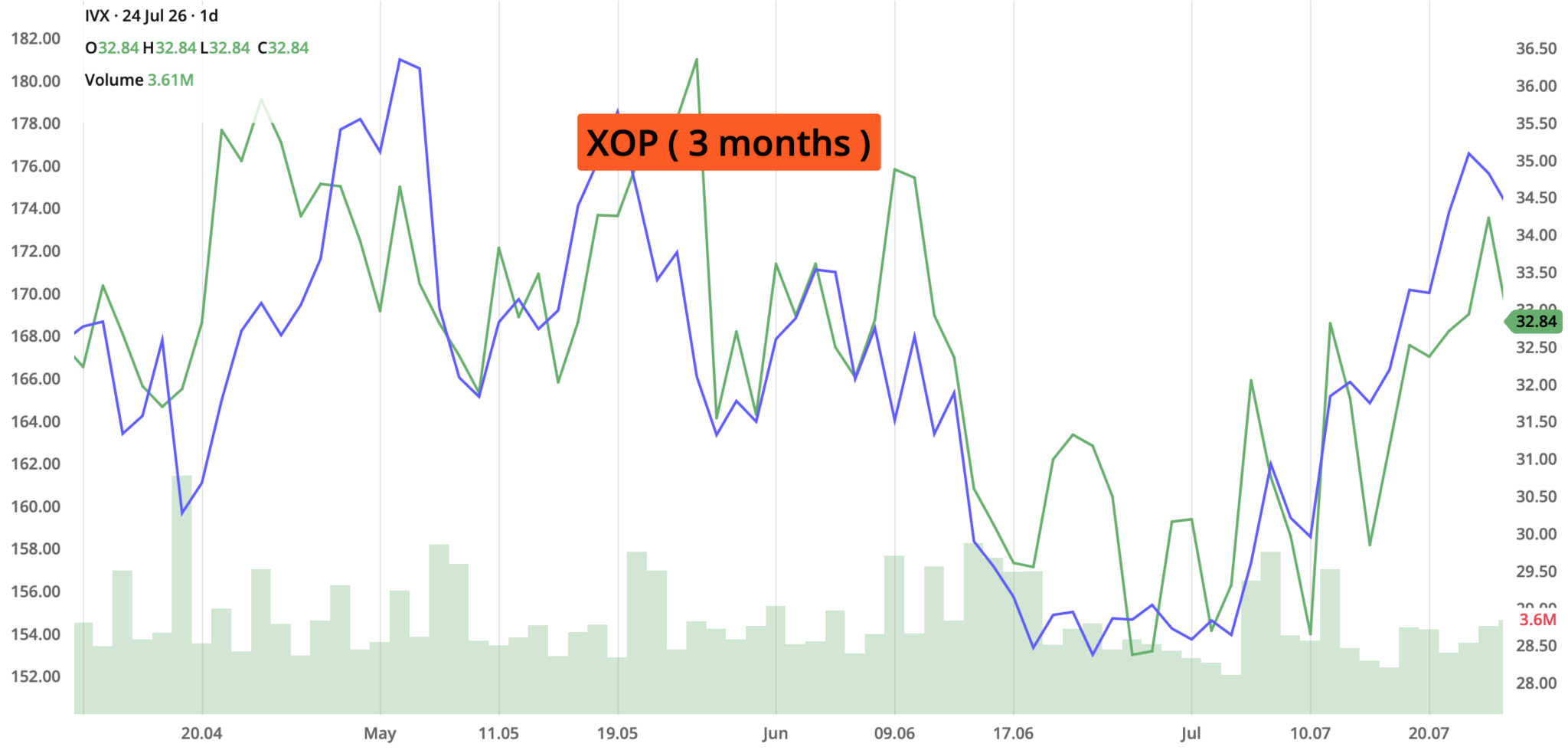
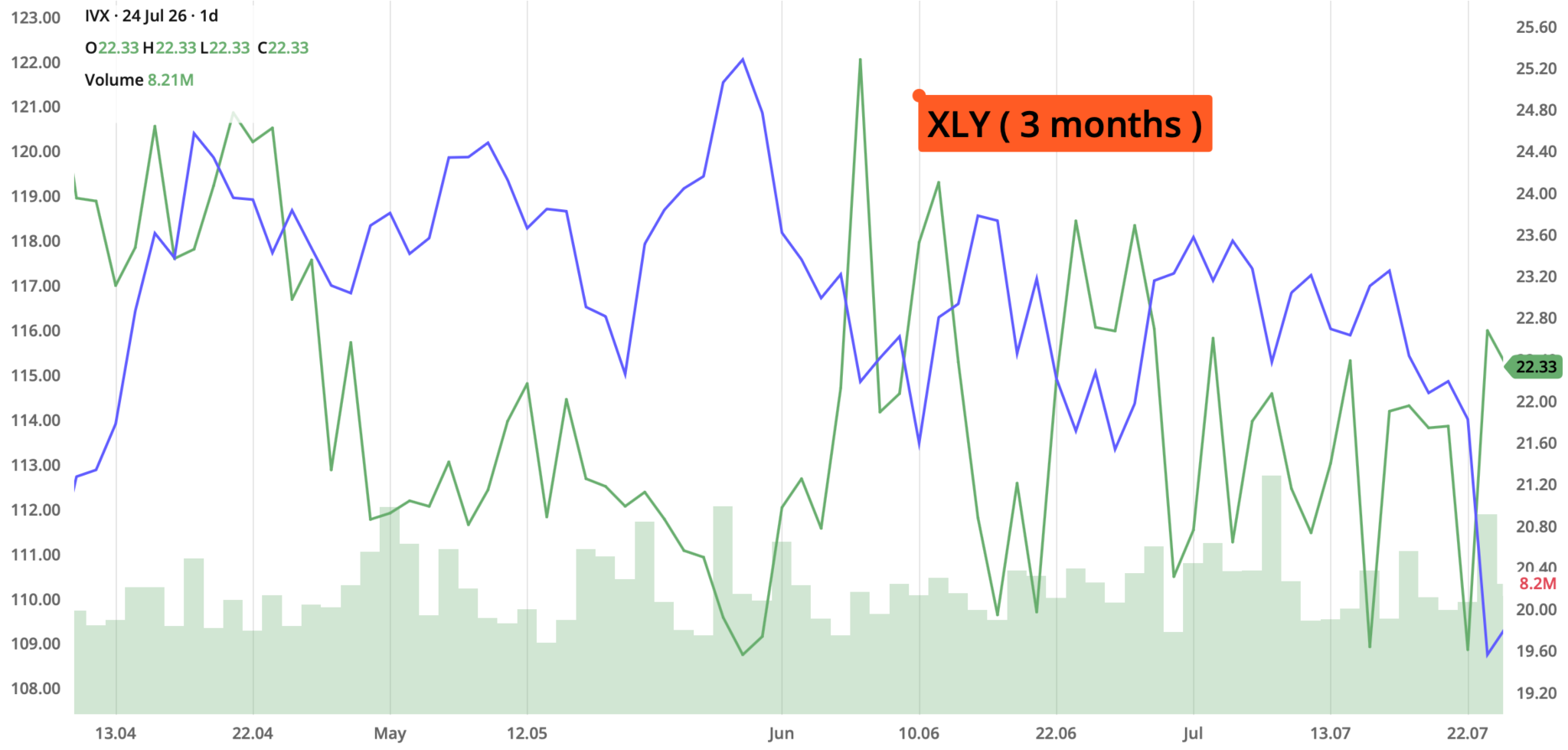
| CONSUMER DISCRETIONARY (XLY) | -5.53% |
Notable Gainers Week of July 20th – July 24th
Broader U.S. equity markets faced downward pressure and closed mostly lower, dragged down by a tech-sector sell-off and growth stock valuation compression.
- Super Micro Computer (SMCI): Surged 24.5% following a strong preliminary business update highlighting a record order backlog and nearly doubled gross margin guidance.
- Micron Technology (MU): Jumped 12.2%, leading a sharp rebound in semiconductor and AI-related names.
- Hasbro (HAS): Rallied 8.8% after reporting record quarterly revenue for Magic: The Gathering and raising its full-year guidance.
- 3M (MMM): Climbed 7.3% on the back of a strong earnings beat and an upward revision to its full-year profit forecast.
- General Motors (GM): Gained 4.9% following better-than-expected quarterly profit and revenue driven by robust North American demand.
Notable Losers Week of July 20th – July 24th
The week's downside pressure was heavily concentrated in high-multiple tech segments, select semiconductor names, and consumer discretionary counters facing profit-taking and margin scrutiny. As institutional capital rotated toward defensives, high-growth leaders underwent sharp corrections.
- Rapid7 (RPD, -22.21%): Led the downside list for the week, experiencing heavy selling pressure as cybersecurity valuations faced aggressive compression despite longer-term sector tailwinds.
- Tenable (TENB, -19.17%): Followed closely behind, retreating sharply as growth-oriented software names saw widespread institutional re-allocations ahead of major macro catalysts.
- Tesla (TSLA, -17.79%): Dropped sharply over the course of the week, pressured by broader weakness in mega-cap tech growth components and ongoing margin sensitivity concerns.
- STMicroelectronics (STM, -17.10%): Rounded out the primary laggards, sliding alongside a broader semiconductor pullback as investors locked in profits following prior cyclical rallies.
Review selected market indices below:
Daily Notable Market Action
Market Summary for Monday, July 20th
Equity markets drifted through a subdued and hesitant session as investors attempted to stabilize following a semiconductor-led sell-off. Energy markets commanded intense focus early on as crude oil spiked above key thresholds amid fresh geopolitical friction in the Middle East, injecting renewed inflation anxiety into the tape.
Concurrently, gold and other safe-haven assets experienced unique cross-currents, defying traditional war-trade scripts as bond yields drifted higher. Trading desks displayed limited conviction, leaving major indices struggling to maintain intraday rebound attempts and ultimately closing slightly in the red as participants braced for an upcoming wave of mega-cap tech earnings.
Fixed-income markets saw benchmark yields edge higher alongside firming crude prices, keeping duration pressure active on high-multiple growth and technology sectors.
- S&P 500: 7,443.28 (-0.20%)
- Nasdaq Composite: 25,508.07 (-0.05%)
Market Summary for Tuesday, July 21th
Wall Street staged a decisive rebound, driven by a sharp recovery in semiconductor counters and artificial intelligence leaders following the prior week's steep sell-off. Investors eagerly stepped back into beaten-down tech names, taking advantage of lower entry points.
Meanwhile, energy markets remained a prominent fixture as crude oil continued to press higher toward multi-week highs, fueled by ongoing supply route and geopolitical risks. Despite lingering macro cross-currents, broad-based buying swept across cyclical and growth sectors alike, allowing major indices to log strong, uniform gains by the closing bell.
Fixed-income markets experienced downward price pressure and rising yields as upbeat risk sentiment and firming energy commodities prompted bond traders to pare back safe-haven allocations.
- S&P 500: 7,509.20 (+0.89%)
- Nasdaq Composite: 25,837.21 (+1.30%)
Market Summary for Wednesday, July 22nd
Wall Street finished the midweek session on a mixed, fragmented note as investors exercised caution ahead of upcoming mega-cap technology earnings and closely monitored a persistent surge in crude oil prices driven by geopolitical friction. While value-oriented components and select defensive sectors found steady sponsorship, major technology and semiconductor heavyweights encountered renewed selling pressure. This divergence left broader indices caught in a tight tug-of-war, with cyclical strength offset by tech-sector drag.
Fixed-income markets experienced subdued movement as benchmark yields held relatively steady, reflecting an underlying wait-and-see mentality among bond traders ahead of upcoming growth and inflation catalysts.
- S&P 500: 7,498.96 (-0.14%)
- Nasdaq Composite: 25,690.90 (-0.57%)
Market Summary for Thursday, July 23rd
Equity markets encountered broad downward pressure as a wave of mixed corporate earnings results and ongoing tech sector recalibration prompted widespread profit-taking. Energy markets remained elevated as crude oil prices hovered near recent multi-week highs due to lingering geopolitical supply concerns, keeping input-cost inflation front of mind for traders. Safe-haven demand experienced a modest bump, drawing flows into fixed income and precious metals as investors navigated the heightened volatility ahead of Friday's end-of-month data releases.
Fixed-income markets saw safe-haven buying push Treasury prices higher, resulting in a moderate decline in benchmark yields across the curve as market participants sought shelter from equity weakness.
- S&P 500: 7,438.15 (-0.81%)
- Nasdaq Composite: 25,380.40 (-1.21%)
Market Summary for Friday, July 24th
Wall Street finished the session mixed, weighed down by sharp losses across major artificial intelligence and big-tech components that pushed the tech-heavy composite lower. Conversely, value-oriented sectors and defensive components found solid backing, allowing the broader market and blue chips to eke out modest gains. Energy markets experienced a notable downward correction, pulling back for the first time in a week as geopolitical risk premiums eased slightly. Trading activity remained cautious as investors locked in profits and squared positions heading into the weekend.
Fixed-income markets saw stable to slightly higher bidding as participants sought relative safety amidst the tech-led equity turbulence, keeping benchmark Treasury yields contained near recent ranges.
- S&P 500: 7,411.98 (+0.05%)
- Nasdaq Composite: 24,975.82 (-0.64%)
Notable Earnings (July 27th – July 31st)
The coming week hands investors a firehose of results, and the biggest names in tech are front and center. Microsoft, Apple, Amazon, and Meta all step into the spotlight. The mood heading in is surprisingly cautious for some of these giants. Microsoft and Amazon in particular are drawing a wary eye, with expectations running hot and little room left for anything short of a knockout. Apple looks steadier, riding a bit more goodwill into its report, while Meta carries a touch of optimism but has a history of swinging hard in either direction once the numbers hit. The semiconductor and chip-gear crowd, including Lam Research, KLA, Seagate, and Qualcomm, adds another layer of drama, with several of them looking genuinely strong going in and others quietly flashing warning signs.
Beyond the tech titans, the week is a smorgasbord of sectors that touches nearly every corner of the market. On the bright side, names like F5 Networks, AutoNation, Chevron, and Ferrari's cousins in the auto world are riding real momentum and upbeat vibes, and a few under-the-radar picks like Bloom Energy and Nucor could reward patient believers if the tailwinds hold. The financial and payments giants Visa and Mastercard, along with healthcare heavyweights Bristol Myers Squibb, Humana, and AbbVie, round out a lineup that promises plenty of surprises.
The actual earnings date may vary, so traders should confirm with their brokers. If a trader wishes to open a position to participate in earnings announcements, it is important to check whether the earnings are released BEFORE the markets open or AFTER the markets close on the date of earnings.
Monday, July 27th:
APLD / CDNS / WM / NUE / PFG / BRO
Tuesday, July 28th:
BE / PYPL / STX / V / KO / BA/ UPS / GLW / MDLZ / SHW
Wednesday, July 29th:
BSX / MSFT / META / SOFI / QCOM / SBUX / PG / ARM / HOOD / LRCX / ADP
Thursday, July 30th:
AAPL / AMZN / MA / BMY/ COIN / RIVN
Friday, July 31st:
XOM / CVX / ABBV / MRNA / AU
Economic Calendar (July 27th – July 31st)
The economic calendar for the week of July 27th through July 31st is heavily front-loaded and critical for market direction, headlined by the FOMC rate decision and policy statement on Wednesday. The week also features high-impact data points including the advance estimate of Q2 GDP, the Core PCE Price Index (the Federal Reserve's preferred inflation gauge), and the Employment Cost Index, culminating in late-week updates on consumer sentiment and personal spending.
Monday, July 27th
US Durable Goods Orders (June Prelim): Measures the monthly change in total value of new orders for long-lasting manufactured goods.
US Core Durable Goods Orders: Tracks new orders excluding volatile transportation items as a clearer gauge of underlying business investment and manufacturing trends.
Tuesday, July 28th
FOMC Meeting (Day 1): The Federal Open Market Committee kicks off its two-day policy meeting, setting the stage for the rate decision and press conference on Wednesday.
CB Consumer Confidence (July): Measures consumer attitudes regarding business conditions, employment, and personal financial health
Wednesday, July 29th
S&P/Case-Shiller Home Price Index (May): Tracks monthly and annual changes in residential real estate prices across major U.S. metropolitan areas.
FOMC Rate Decision & Policy Statement: The Federal Reserve announces its latest interest rate decision and releases its policy statement.
FOMC Press Conference: Federal Reserve leadership holds its post-meeting press conference to provide commentary on monetary policy, inflation, and the broader economic outlook.
MBA Mortgage Applications: Weekly update tracking mortgage application volume and refinancing activity.
EIA Crude Oil Inventories: Weekly report detailing changes in U.S. commercial crude oil, gasoline, and distillate stockpiles.
Thursday, July 30th
U.S. GDP (Q2 2026 - Advance Estimate): The preliminary headline reading for second-quarter gross domestic product growth, serving as a critical indicator of economic momentum.
U.S. Personal Income & Outlays (June): Includes crucial reads on personal income, consumer spending, and the Federal Reserve's preferred inflation gauge—the Core PCE Price Index.
Weekly Initial Jobless Claims: The standard high-frequency labor market update tracking initial filings for state unemployment benefits.
Friday, July 31st
U.S. Personal Income & Outlays (June): Provides the definitive look at consumer spending power and includes the monthly update to the Federal Reserve's favored inflation gauge, the Core PCE Price Index.
Chicago PMI (July): A regional business barometer tracking manufacturing and non-manufacturing activity in the Midwest.
U.S. Consumer Sentiment (July - Final): The University of Michigan's final monthly reading measuring consumer attitudes toward personal finances and business conditions
Blue Sky Horizons
The Algorithmic Edge – How AI may be Reshaping Market Mechanics and Risk
The integration of artificial intelligence into modern capital markets is reshaping the ecosystem across three distinct dimensions: execution speed, alternative data processing, and systemic structural risk.
AI-driven systems and advanced algorithms now account for the vast majority of daily trading volume across global equities and derivatives. Rather than relying on rigid, hard-coded "if-then" rules from traditional quantitative eras, contemporary systems employ reinforcement learning and multimodal models. These models adapt dynamically to shifting market regimes—instantly adjusting risk parameters, hedging exposures, and executing high-frequency strategies across microsecond timeframes.
The true edge of modern AI in trading lies in its capacity to digest unstructured "alternative data" at a scale impossible for human analysts. Beyond standard price and volume feeds, algorithms continuously parse global news wire semantics, regulatory filings, alternative supply chain indicators, and cross-asset sentiment shifts. This allows institutional desks to price in fundamental pivots and identify non-linear correlations before they manifest visibly on technical charts.
While AI enhances price discovery and execution efficiency, it introduces distinct structural vulnerabilities. Because vast pools of capital are managed by similar feedback-loop models, markets are increasingly susceptible to sudden, synchronized liquidity pulls during macroeconomic shocks. When multiple automated engines react simultaneously to unexpected headline data or cross-asset correlation breakdowns, the potential for exaggerated intraday volatility—and localized flash corrections—could magnify significantly.
Ultimately, artificial intelligence is cementing its role as an omnipresent infrastructure layer in the markets. It serves as an extraordinarily powerful tool for pattern recognition and risk management, but it simultaneously elevates the premium for human oversight, disciplined trade structuring, and an understanding of regime-change dynamics.
Thank you for reading. Until next week's close,
Have a safe and productive Trading week!
Fauzia Timberlake
About the Author: Fauzia Timberlake is a professional options coach and financial strategist specializing in risk management and portfolio architecture for self-directed investors. She is Founder and Managing Partner of Option Engines.
Questions / Comments
We're here to serve IVolatility users and we welcome your questions or feedback about the option strategies discussed in this newsletter. If there is something you would like us to consider and/or analyze, we're always open to your suggestions. Use support@ivolatility.com.
Previous issues are located under the Trade Ideas tab on our website.